Meta unveils pocket AI device Charm, $1,299 VR glasses
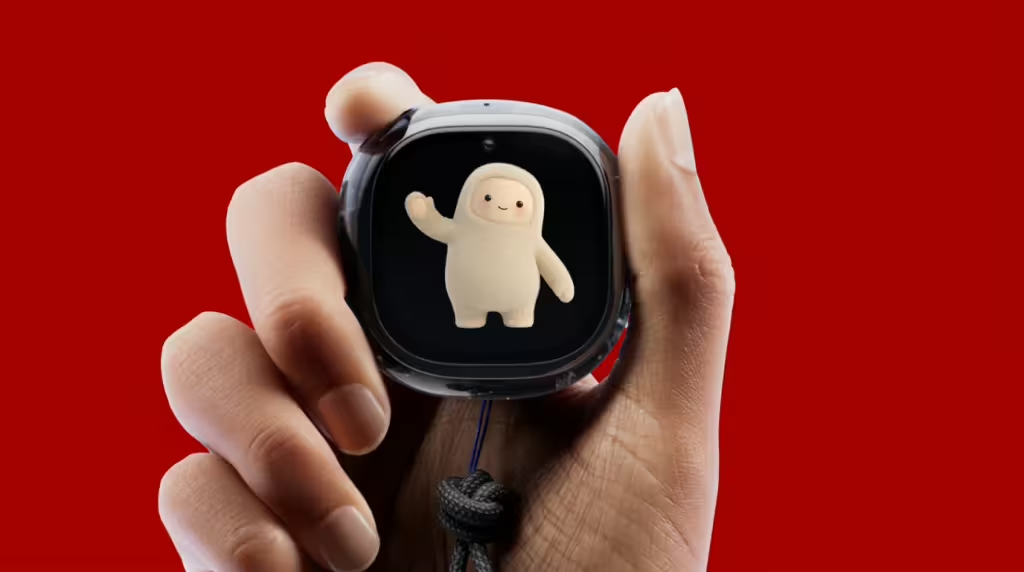
A handheld device roughly the size of an AirPods case is Meta’s next bet on life after the smartphone. Chief Executive Mark Zuckerberg introduced Meta Charm on Wednesday at the company’s annual Meta Connect event in Menlo Park, California, built around its Muse AI assistant.
· Originally published by ontime+
Key Points
- Zuckerberg announced Meta Charm, a handheld AI device running the Muse assistant, with a 2-inch touchscreen.
- Meta also showed slim virtual-reality glasses priced at $1,299 and camera-free smart glasses addressing privacy criticism.
- The push tests whether AI hardware can become the industry's successor to the smartphone.
The latest:
A handheld device roughly the size of an AirPods case is Meta’s next bet on life after the smartphone. Chief Executive Mark Zuckerberg introduced Meta Charm on Wednesday at the company’s annual Meta Connect event in Menlo Park, California, built around its Muse AI assistant. Meta said the device ships during the December holiday season but did not disclose a price.
Details:
- The device: Meta Charm is about the size of an Apple AirPods case and carries a touchscreen measuring roughly 2 inches, along with built-in 5G connectivity. Meta said it ships in the December holiday season, and did not announce a price.
- Zuckerberg’s pitch: The chief executive told the Meta Connect audience that the company is putting the full Muse experience, including its live voice system and avatars, into a device small enough to fit on a keychain and “always available to talk to you.”
- The VR glasses: Meta introduced its first virtual-reality device slim enough to resemble a pair of glasses, priced at $1,299 and due in spring 2027. The company said it aims to match capabilities of larger, costlier rivals such as Apple Vision Pro.
- How it got thin: The headset weighs roughly as much as a deck of playing cards, a design Meta said was made possible by moving the battery and processor into a separate puck-shaped unit worn off the head rather than housed in the frame.
- The privacy answer: Meta also announced new smart glasses without a camera, designed to blunt mounting criticism over AI devices that can film and photograph people without consent. The camera-free model marks a departure from the line that built the category’s early success.
- Muse expands: Meta extended the Muse assistant, already widely adopted, across its smart glasses range after adding new capabilities including computer use and integration with retailers and services such as Walmart, Best Buy and Gap.
- The interface shift: Meta said Muse will become the primary interface for its glasses, letting users shop, book appointments and complete tasks by voice, pushing the assistant ahead of touch and app-based controls on the company’s wearables.
- The wider race: Silicon Valley is searching for a successor to the smartphone, pouring billions of dollars into devices built around AI assistants that can see, hear and respond to their surroundings. Which form factor wins broad adoption remains unsettled.
- Meta’s head start: The company entered hardware through smart glasses, turning its partnership with EssilorLuxottica into one of the first genuine success stories in the category and the foundation for Wednesday’s expansion into handhelds and headsets.
Background:
Meta’s smart glasses partnership with EssilorLuxottica gave the company its first hardware win outside social media, a rare bright spot after years of heavy spending on virtual and augmented reality products that struggled to reach mainstream buyers.
Between the lines:
The two announcements pull in opposite directions. Meta is adding a camera-free pair of glasses to answer consent complaints while selling a keychain-sized device that is always listening, suggesting the company sees the privacy backlash as tied to filming specifically rather than to ambient AI itself. Making Muse the primary interface also locks users into Meta’s assistant across every device it sells.
What’s next
Watch for Meta Charm pricing ahead of the December holiday shipment, the spring 2027 launch of the $1,299 headset, and whether retail partners beyond Walmart, Best Buy and Gap join the Muse ecosystem.