U.S. Treasury tour severs Iran’s last air and banking links
Iran lost access to key regional air routes and banking channels within days of a two-week lobbying trip by a senior U.S. Treasury official across the Middle East and Europe, the Wall Street Journal reported.
· Originally published by ontime+
Key Points
- Gulf states, Turkey and others cut Iranian flights and banks after a U.S. Treasury official's two-week tour.
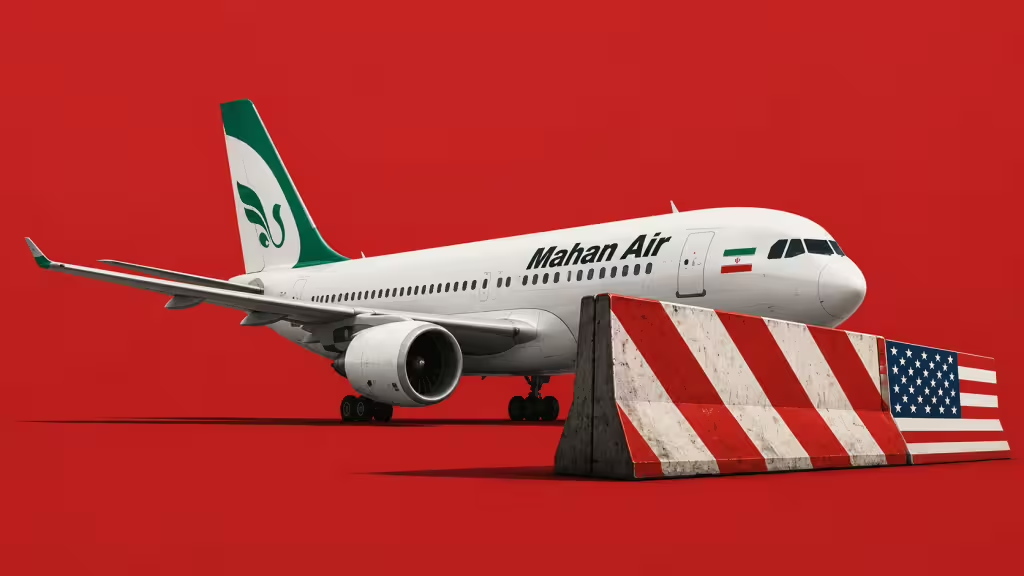
- Oman, the U.A.E. and Turkey acted within days, targeting Mahan Air, Bank Melli and Bank Mellat.
- The moves strip Tehran of financial and travel routes that survived decades of earlier sanctions.
The latest:
Iran lost access to key regional air routes and banking channels within days of a two-week lobbying trip by a senior U.S. Treasury official across the Middle East and Europe, the Wall Street Journal reported. Oman, the United Arab Emirates and Turkey barred Iranian carriers and restricted two of Tehran’s largest lenders. The Treasury Department engaged more than 50 countries in the campaign.
Details:
- The envoy: Jonathan Burke, assistant secretary for terrorist financing and a former Citi managing director in London, made the trip this month, according to the Wall Street Journal. He said partners were showing new urgency, and framed the choice for Iran’s trading partners as doing business with Tehran or with Washington.
- Oman first: Oman, long an intermediary between Iran and the West, was the first stop. Middle Eastern officials familiar with the matter said Muscat read the visit as proof Washington would enforce sanctions and that refusal could damage its economy. Oman banned all Mahan Air flights within a week, then blocked all Iranian airlines on Wednesday.
- The Emirati moves: The U.A.E. this week barred local branches of Bank Melli Iran, the country’s largest commercial lender, from transactions involving Iran, and on Thursday banned all flights by Iranian airlines. People familiar with the matter said Burke raised recent U.S. action against the local branch of an Egyptian bank that had dealt with Iran.
- Turkey and the Caucasus: Ankara canceled Mahan Air flights after Burke’s visit and revoked the license of Bank Mellat, one of Iran’s largest private lenders and a conduit for Iran-Turkey trade, the Wall Street Journal reported. Azerbaijan and Georgia also shut out Iranian airlines after outreach from U.S. diplomats.
- Mahan Air: Mahan Air is a private carrier linked to the Islamic Revolutionary Guard Corps and assessed by Western governments to move arms, troops and supplies. Though already under U.S. sanctions, its flights were still permitted by Oman and others. Burke said he had raised the airline with partners for months while watching its flights on tracking software.
- Tehran’s response: Iranian President Masoud Pezeshkian, speaking this week at the United Nations General Assembly, acknowledged the sanctions were causing pain but said the resistance of the Iranian people would only increase and that Iran would not bow. The Journal reported Tehran has offered a seven-day halt to attacks in exchange for economic relief.
- The assessments: British lawyer Nigel Kushner, who has advised companies on Iran sanctions for two decades, said he had never seen pressure this intense on Iranian banking and aviation, and judged Washington had achieved more in weeks than in campaigns begun in 2010. Former intermediary Mustapha Pakzad said the Bank Melli step hit the “plumbing” of Iran’s external commerce.
- What remains: Mahan Air still flies to China and Russia, Iran’s two largest partners. The Treasury has sanctioned Iranian-affiliated businesses and agents in both, but Burke said talks with Beijing and Moscow form part of broader political negotiations run by the White House.
- The London leg: Burke closed the trip in London with visits to the Foreign Office and the U.K. Treasury. Britain has announced it will not renew waivers for Iranian banks operating in the city, a step that could shut down Bank Melli’s British subsidiary, whose license comes up for renewal next month.
Background:
Iran has accumulated sanctions since the 1979 revolution and the U.S. Embassy hostage crisis, losing dollar access and overseas assets. It nonetheless retained air links and banking ties with Middle Eastern neighbors until this year’s war soured Gulf states on those connections.
Between the lines:
The speed of the Omani, Emirati and Turkish decisions suggests the campaign worked because Gulf capitals were already recalculating: Iran struck energy infrastructure in states including the U.A.E., the Revolutionary Guard keeps attacking ships near the Strait of Hormuz, and Houthi forces have hit Saudi oil facilities. Matthew Levitt, a former Treasury official, cautioned that such pressure holds only if sustained.
What’s next
Bank Melli’s British license comes up for renewal next month, determining whether its London subsidiary closes. Watch whether Washington responds to Tehran’s offer of a seven-day halt to attacks, and whether more governments follow Oman’s blanket flight ban.