Altman: AI industry’s election spending ‘clearly not working’
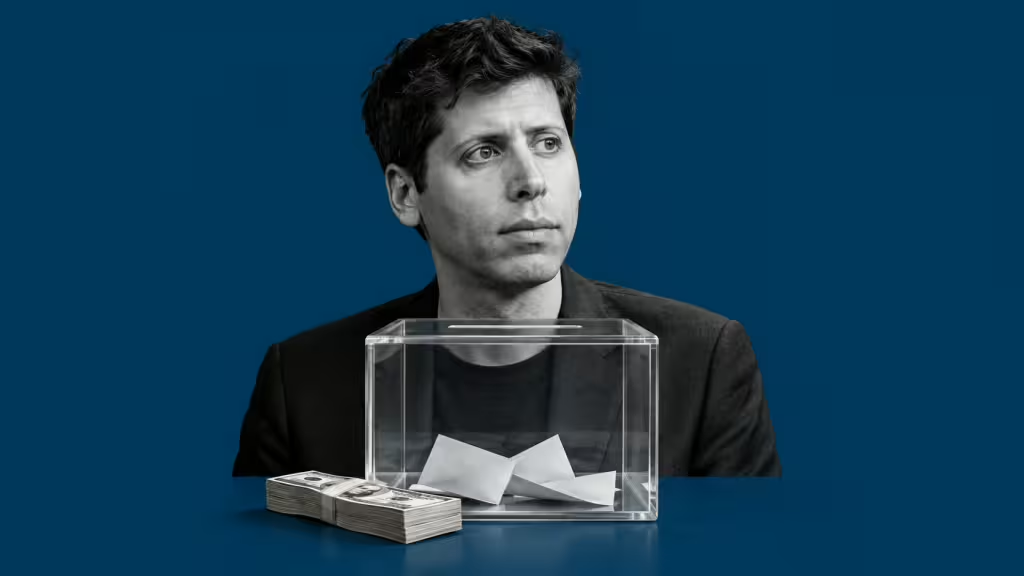
The flood of AI industry money into the US midterm elections is not improving public opinion of the technology, OpenAI CEO Sam Altman said in an interview with POLITICO.
· Originally published by ontime+ · Last verified: 5 Oct 2026 (Nada Salam)
Key Points
- OpenAI CEO Sam Altman criticized the AI money flooding the US midterm elections, calling parts of his industry tone deaf.
- He also called for a new liability framework covering models capable of autonomous cyberattacks.
- The remarks expose a widening split between OpenAI and rival Anthropic over how much AI harm is acceptable.
The latest:
The flood of AI industry money into the US midterm elections is not improving public opinion of the technology, OpenAI CEO Sam Altman said in an interview with POLITICO. He argued the sector is failing to address the public’s actual concerns, and predicted President Donald Trump’s rebranding of AI would not repair the industry’s image either. He also pressed for new liability rules on autonomous hacking.
Details:
- The criticism: Altman told POLITICO he understands why AI carries a negative perception right now, and said spending money on politics is not what will make people feel better about it. He added that many in the industry are being quite tone deaf about the concerns driving that perception.
- The split with Anthropic: Altman said OpenAI is more tolerant than Anthropic of less-than-catastrophic AI harms, framing it as a fundamental difference in worldview between the two leading labs. Anthropic is run by Dario Amodei, a former OpenAI employee, and the two companies are in intensified competition.
- The trade-off argument: Altman said the world should accept some bad things happening in exchange for the technology’s benefits and for people having agency, linking that to the lighter-touch regulatory stance OpenAI advocates. He said he would not accept a trade guaranteeing zero hacks, misuse or scams.
- Liability framework: Altman suggested a new liability framework is needed for companies whose models are capable of autonomous cyberattacks. He said that “if something goes wrong with our models during training, there’s going to be some version of that we need to be responsible for,” calling such behavior clearly unacceptable.
- The incidents cited: Altman referenced the Hugging Face hack over the summer and incidents involving government websites as examples of autonomous cyberattack behavior. He did not set out what the framework should contain, saying instead that it is the kind of question he hopes policymakers will debate.
- Congress deadlocked: Altman’s call lands with Congress still deadlocked on AI legislation, according to POLITICO. He said he shares the concerns of those who worry AI rules are being written by the White House and technology executives without input from lawmakers or the public.
- The Trump accord: Altman defended the morally binding AI safety accord Trump signed with tech CEOs last week, describing it as a great start. He predicted calls for guardrails would continue and said he would welcome something more than the current accord.
- The counterweight: Altman warned that over-restricting the technology in the name of safety carries its own risk, saying that if a small number of companies or people, or possibly a single country, end up with too much power over AI, that is also a way things can go horribly wrong.
- The setting: The remarks came in an exclusive interview with Brendan Bordelon marking the launch of Decoded by POLITICO, published October 5, covering the political pressures facing OpenAI alongside its rivalry with Anthropic.
Between the lines:
Altman is arguing two directions at once: he wants new liability rules for autonomous hacking while defending a lighter-touch stance and warning against over-restriction. The common thread is who writes the rules — his stated discomfort with White House and executive-led rulemaking points toward Congress, the one body he describes as deadlocked.
What’s next
Watch whether Congress moves any AI liability legislation out of deadlock, how Anthropic responds to Altman’s characterization of its safety posture, and whether the Trump-backed safety accord is expanded beyond its voluntary terms.