Attacks on ships near Hormuz hit wartime high in October
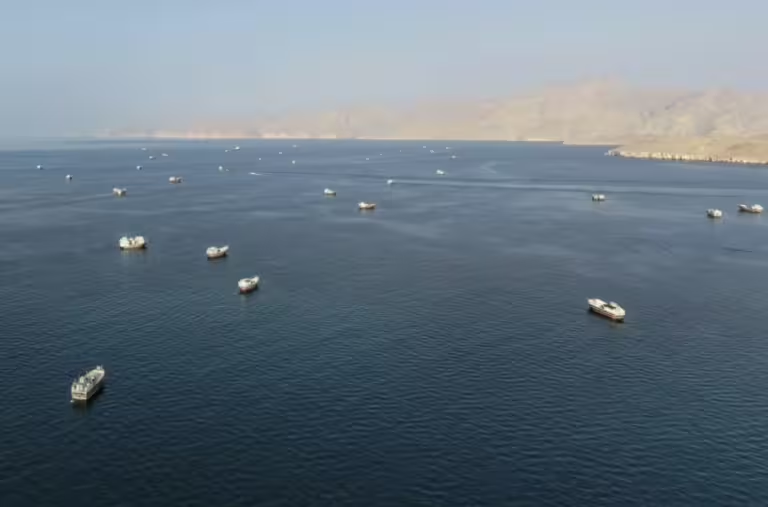
October was the worst month for shipping in the Iran-US war, with more than 30 attacks reported on commercial vessels in and around the Strait of Hormuz, according to the UK Maritime Trade Operations.
· Originally published by ontime+ · Last verified: 31 Oct 2026 (Khaled Aziz)
Key Points
- More than 30 attacks on commercial vessels were reported around the Strait of Hormuz in October.
- That is more than double September's total and above March, the war's first full month.
- Hormuz carries a large share of seaborne oil, making shipping risk a global price driver.
The latest:
October was the worst month for shipping in the Iran-US war, with more than 30 attacks reported on commercial vessels in and around the Strait of Hormuz, according to the UK Maritime Trade Operations. The agency said the count was more than double September’s and exceeded March, the first full month of the conflict. Total reported incidents since the war began stand at 145.
Details:
- The numbers: UKMTO logged more than 30 incidents in October across the Strait of Hormuz, the Gulf of Oman and the Arabian Gulf. That is more than twice the September figure and above the 30 recorded in March, which had been the highest single month of the war until now.
- The cumulative toll: UKMTO put the total at 145 reported incidents since the start of the Iran-US war. The agency did not break the running total down by month, by location within the three waterways, or by the type of vessel involved.
- The caveat: UKMTO said the real figure could be higher than its count. Its tallies only capture incidents reported by verified vessels operating in the region, which leaves out any attack involving ships that do not report to the agency or are not registered with it.
- The latest incident: An oil tanker was struck by an unknown projectile in the Strait of Hormuz. The party responsible has not been identified, and no damage assessment, casualty figure or vessel name has been released.
- The military track: The Israeli army is updating its list of targets ahead of possible new strikes on Iran. No timeline has been announced and the targets under review have not been described.
- The diplomacy: Qatari mediators returned to Tehran as part of a push for a deal. The agenda for the talks, the Iranian officials they are meeting and the terms under discussion have not been disclosed.
- Trump’s line: US President Donald Trump said the war with Iran would be wrapped up soon. He did not set a date, name the terms of any settlement or say what would trigger a halt to the fighting.
- The Yemen front: The Saudi-led coalition said it destroyed drones launched by the Houthis. The number of drones, their intended targets and the location of the interceptions were not specified.
- The market reaction: Oil prices are on track for a fourth consecutive monthly gain, with traders pricing in the risk of renewed escalation. The rally now spans the bulk of the conflict rather than a single shock, pointing to a sustained risk premium rather than a one-off spike.
Background:
The Strait of Hormuz is the sole sea route out of the Gulf, and the Iran-US war has turned it into the central chokepoint of the conflict. UKMTO, a British naval body, is the main channel through which merchant ships report attacks and suspicious approaches in the region.
Between the lines:
The October spike sits alongside two tracks moving in opposite directions: Israel preparing fresh target lists for Iran, and Qatari mediators back in Tehran. Oil’s fourth straight monthly gain suggests markets are weighting the first more heavily than the second, and Trump’s talk of a quick end has not reversed that pricing.
What’s next
Watch UKMTO’s November incident count against October’s 30-plus, the outcome of the Qatari mission in Tehran, and whether Israel moves from updating target lists to striking.