BAE unveils two counter-drone systems built for swarm attacks
Two new defense systems designed to counter drone swarms and missile attacks were unveiled by BAE Systems at the AUSA exhibition, according to Army Technology.
· Originally published by ontime+ · Last verified: 19 Oct 2026 (Ahmed Kawah)
Key Points
- BAE Systems unveiled MDACS and HPM, two layered defense systems aimed at drone swarms and missiles.
- MDACS fires precision guided munitions; HPM uses microwave energy and runs as long as power holds.
- The pitch targets a core weakness of kinetic air defense: finite, expensive interceptor stockpiles.
The latest:
Two new defense systems designed to counter drone swarms and missile attacks were unveiled by BAE Systems at the AUSA exhibition, according to Army Technology. The company said in a Monday statement that the Multi-Domain Artillery Cannon System and a High Power Microwave weapon are meant to deliver layered protection for critical facilities and maneuvering forces against large-scale attacks.
Details:
- The gap addressed: BAE Systems said the two systems target the widening gap between the mass proliferation of drones and the limits facing conventional kinetic air defenses that depend on ammunition stockpiles. The pairing combines high-precision kinetic rounds with directed-energy capability intended to sustain operations without drawing down magazines.
- MDACS explained: MDACS is the kinetic half of the pair, firing a family of guided munitions for both air defense and ground targeting, according to the company. It is designed to launch a hypervelocity guided projectile, and can also employ the Scorpio-XR precision-guided round against fixed and moving ground targets.
- Range claim: The company said Scorpio-XR offers double the range of rounds fired by existing 155mm guns. BAE Systems did not publish a figure in kilometers for either munition, nor the rate of fire or magazine depth of the system itself.
- Mobility: MDACS is air-transportable and was designed to move across the battlefield, the company said, a feature aimed at protecting maneuvering formations rather than fixed sites alone. No host vehicle or crew requirement was specified in the announcement.
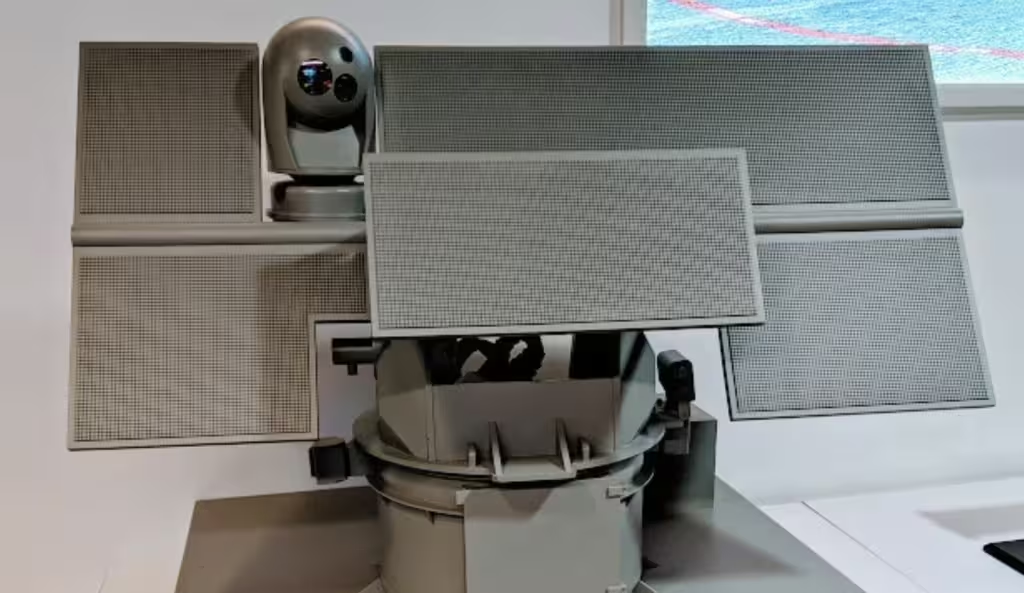
- The microwave weapon: HPM is a directed-energy system that uses microwave energy against drone swarms, a profile suited to engaging multiple airborne targets at once rather than one interceptor per threat. The company did not disclose its effective range or power output.
- Commercial components: BAE Systems said HPM was built using more than 99% commercial off-the-shelf components, and that it can keep firing as long as electrical power is available instead of relying on conventional ammunition stocks. That sourcing choice is pitched as a route to faster production.
- The executive line: Jason Caskiotti, vice president of the weapon systems product line at BAE Systems, said the threat environment is evolving faster than traditional procurement cycles can keep pace with, and argued that a proven technical architecture and a resilient supply chain yield a mature solution: “as long as power is available, defense is available.”
- The stated goal: Both systems are intended to give the US Army more flexible and adaptable defensive options by moving established technologies into operational deployment while preserving battlefield reliability, according to the company. No contract, order or fielding date was announced.
Between the lines:
The commercial-components figure and the power-dependent operating model point at cost and sustainment, not just performance. A system drawing on off-the-shelf parts and electricity rather than purpose-built interceptors is being positioned against an adversary that can field drones far cheaper than the munitions used to shoot them down.
What’s next
Watch for any US Army contract award, test schedule or fielding decision involving either system, and for independent range and power figures that BAE Systems has not released.