Iraq ships 2 million barrels through Hormuz in decades-first run
Two million barrels of Iraqi crude crossed the Strait of Hormuz aboard a very large crude carrier operated by Iraq’s state-owned Oil Tanker Company, the company announced.
· Originally published by ontime+ · Last verified: 4 Oct 2026 (Khaled Aziz)
Key Points
- Iraq's state tanker company moved 2 million barrels of crude through the Strait of Hormuz.
- Its director general called it the company's first such operation in decades.
- Carrying the cargo past Basra gives state marketer SOMO more room on pricing and buyers.
The latest:
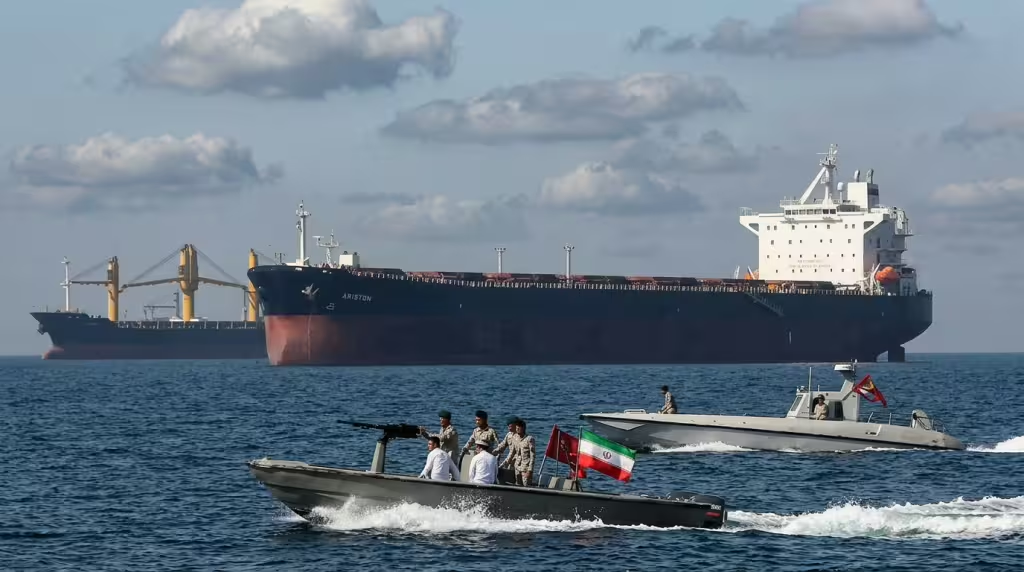
Two million barrels of Iraqi crude crossed the Strait of Hormuz aboard a very large crude carrier operated by Iraq’s state-owned Oil Tanker Company, the company announced. Its director general, Ali Qais Abdul Jabbar, described the voyage as the first operation of its kind by the company in decades, and said it opens better sales and pricing options for the state oil marketer.
Details:
- The cargo: The Oil Tanker Company, owned by the Iraqi state, said it carried 2 million barrels of Iraqi crude on a very large crude carrier, the class of vessel that dominates long-haul Gulf exports. The company did not name the vessel or the destination of the cargo.
- What changed: Rather than handing the crude over to buyers at the port of Basra, the company is now moving it through the strait itself. That shift transfers the shipping leg to the Iraqi side and, according to the announcement, widens the range of markets the cargo can reach.
- The commercial logic: Abdul Jabbar said in a statement that the operation could let state oil marketer SOMO capture better sales and pricing opportunities. Controlling the vessel allows a seller to redirect a cargo while it is at sea rather than fixing the buyer at the loading port.
- The fleet plan: The director general added that the company is working to buy and own specialized crude oil tankers to expand its fleet. The stated aim is to strengthen its ability to compete with regional shipping companies, which currently handle much of the Gulf’s crude haulage.
- The Iranian factor: Iraq has previously secured Iranian permission for its oil tankers to transit the Strait of Hormuz, which Iran has effectively closed during its conflict with the United States. No details were given on the terms or duration of that permission.
- The chokepoint: The Strait of Hormuz is the only sea route out of the Gulf, and every barrel loaded at Basra for a buyer beyond the region must pass through it. Access to the waterway therefore determines whether Iraqi-flagged shipping can serve customers outside the Gulf at all.
- The milestone claim: The description of the voyage as a decades-first rests on the company’s own account. Iraqi state shipping has for years played a limited role in moving the country’s own exports, with foreign and regional operators lifting most cargoes from Basra.
- What was not said: The announcement set no timetable for the tanker purchases, did not say how many vessels the company intends to acquire, and gave no indication of whether further transits through the strait are already scheduled.
Background:
Iraq is OPEC’s second-largest producer and ships the bulk of its crude from southern terminals near Basra. Cargoes have traditionally been sold on terms that leave shipping to the buyer, limiting the state tanker company’s role in its own export chain.
Between the lines:
Owning the voyage rather than selling at the loading port is what gives SOMO the flexibility the company is advertising: a cargo under Iraqi control can be re-sold or re-routed at sea. But the same shift ties Iraqi exports to continued Iranian clearance for transit through a waterway Tehran has effectively closed, converting a commercial gain into a political dependency.
What’s next
Whether further Iraqi-operated transits follow this one, and whether the tanker company announces actual vessel purchases or a fleet target, will show if this was a single operation or a change in how Iraq sells its crude.