Meta deletes terms language that experts read as licensing news scraping
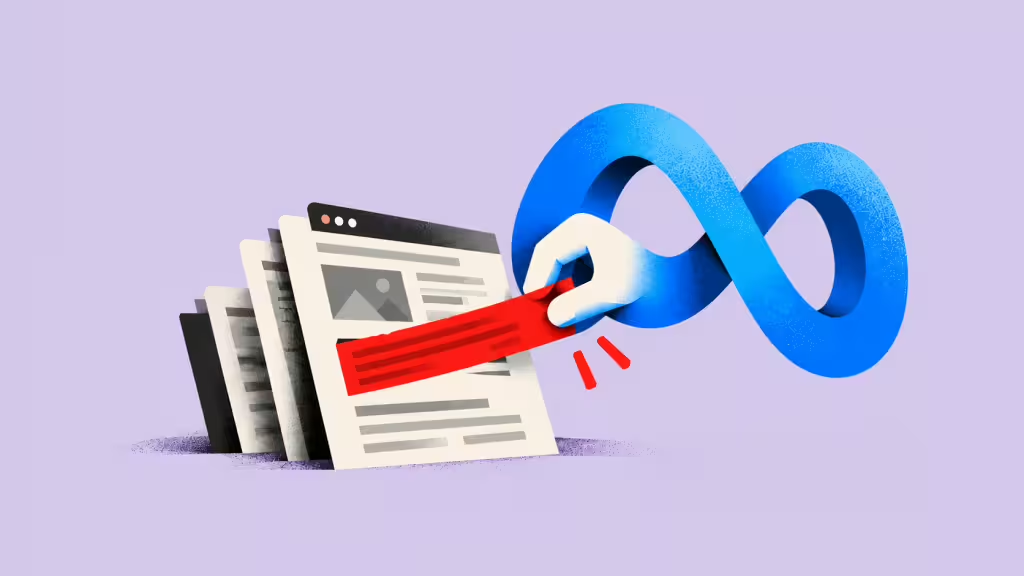
Meta has again rewritten its commercial terms, stripping out a passage that legal experts said handed the company a free right to scrape content from websites, including news publishers, to train its AI systems. The removal follows public backlash over the clause.
· Originally published by ontime+ · Last verified: 18 Oct 2026 (Tamara khadrah)
Key Points
- Meta removed commercial-terms wording that experts said let it scrape sites to train AI.
- The deleted clause covered using any content from linked domains, pages, or URLs.
- The change followed backlash over whether the terms overrode sites' robots.txt blocking rules.
The latest:
Meta has again rewritten its commercial terms, stripping out a passage that legal experts said handed the company a free right to scrape content from websites, including news publishers, to train its AI systems. The removal follows public backlash over the clause. Meta did not announce the change with an explanation of why the wording appeared in the first place.
Details:
- The deleted text: The clause that no longer appears on Meta’s commercial terms page said Meta may use any content from such domains, web pages, or URLs to provide, develop, improve, research, train, and maintain the integrity of Meta Company Products, services, and features offered under those commercial terms and any other applicable supplemental terms.
- The expert reading: James Grimmelmann, a professor of digital and information law at Cornell, was among those who read the language as an attempt to give Meta the right to use scraped site content to train its AI products at no cost, according to The Verge.
- The robots.txt issue: Critics including Nieman Lab interpreted the wording as potentially superseding the blocking instructions publishers write into a site’s robots.txt file, the standard text file that tells automated crawlers which parts of a site they may not collect.
- News sites at the center: The concern centered on news organizations, whose articles are among the most valuable training material for large language models and whose publishers have spent the past two years trying to restrict or price access to that archive rather than see it collected for free.
- A repeat revision: This is not the first adjustment to the terms. The Verge reported that Meta is updating its terms again, after the earlier backlash, indicating the company moved twice on the same document rather than defending the original language.
- What Meta hasn’t said: Meta has not published a replacement clause explaining what rights it now claims over content from linked domains, nor set out whether material already collected under the deleted wording will be excluded from its AI training sets.
- Where it sat: The language lived on the commercial terms page rather than in a consumer privacy policy, meaning it governed business-facing use of Meta’s products and drew far less reader attention than a standard terms-of-service update.
Between the lines:
Removing the clause settles the wording but not the underlying question. Meta has not stated an alternative basis for training on third-party web content, and the deletion leaves unaddressed what the robots.txt objection raised: whether publisher-set crawling limits bind the company at all. The reversal after backlash suggests the original text was broader than Meta was prepared to defend publicly.
What’s next
Watch whether Meta posts revised language defining its rights over third-party content, and whether news publishers or trade bodies press the company to confirm that material gathered under the deleted clause will not be used.