
Meta Unveils Lightweight VR Glasses at $1,299.99
The latest Meta has unveiled Meta VR Glasses, a mixed-reality device weighing about 100 grams, with sales scheduled for spring 2027 at $1,299.99.
· Originally published by ontime+
Key Points
- Meta’s 100-gram mixed-reality glasses will launch in spring 2027, shifting core computing to a connected pocket module.
- Micro-OLED displays, AI controls and Disney, ESPN and TNT partnerships underpin Meta’s premium entertainment pitch.
- The design seeks to make immersive computing more comfortable while extending Meta’s strategy beyond conventional Quest headsets.
The latest
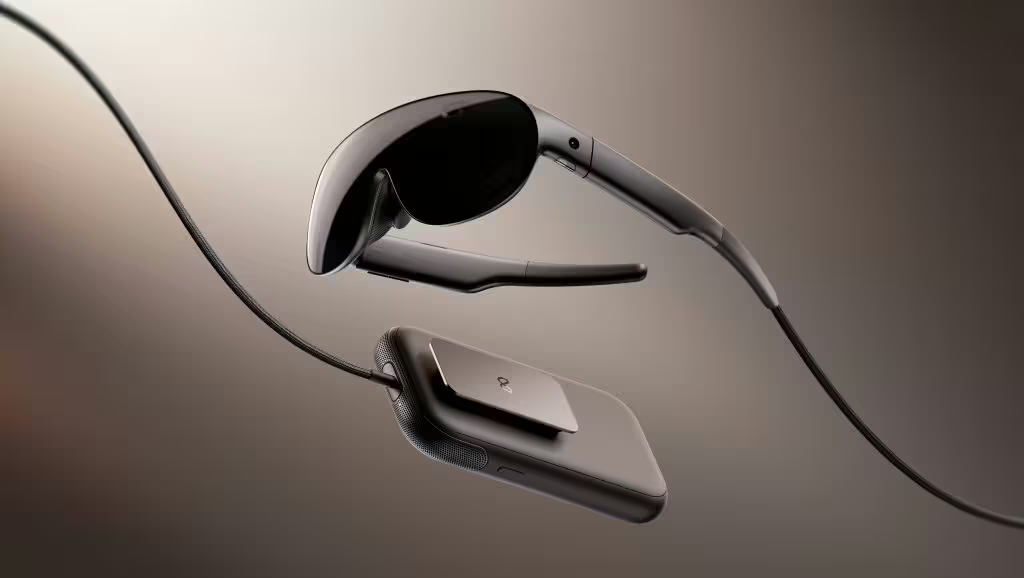
Meta has unveiled Meta VR Glasses, a mixed-reality device weighing about 100 grams, with sales scheduled for spring 2027 at $1,299.99. Introduced at the company’s Connect conference, the product moves its battery and much of its processing hardware into a cable-connected pocket-sized module, allowing the display and sensors to sit in eyewear designed for longer use. Meta is positioning it as a premium platform for immersive films, live sports, gaming and virtual computing, rather than as another mainstream Quest headset.
Details
- Display system: The micro-OLED screens, branded the 5K Infinite Display, deliver 37 pixels per degree and support Dolby Vision. Dolby Atmos provides spatial audio, while eye tracking and hand gestures let users navigate content without depending solely on conventional controllers. Meta says the device is the first VR product certified for IMAX Enhanced.
- Entertainment lineup: Disney+ will add selected 3D films in November, including certain Marvel titles. Some experiences are designed to combine a virtual screen with digital environments, visual effects and spatial audio that respond to the viewer’s physical surroundings. Meta is presenting the glasses as a personal cinema as well as an immersive gaming system.
- Live sports: Partnerships with ESPN and TNT Sports are intended to provide more than 100 immersive live US sporting events annually. The sports offering broadens the company’s entertainment strategy beyond on-demand films and places recurring live programming among the device’s core uses.
- Computing controls: Meta AI will be built into the interface, enabling voice control for certain functions. Users can also create multiple virtual screens and work with a virtual keyboard and touchpad projected onto a physical surface. Connections to computers and other devices extend the product beyond standalone entertainment and toward personal computing.
- Design trade-off: At roughly one-fifth the weight of the Meta Quest 3, the glasses reduce the load carried on the face. The approach does not eliminate external hardware: users must carry the separate processing and battery unit while it remains connected to the eyewear by cable.
Background
Meta’s hardware strategy has evolved since Facebook was renamed Meta in 2021. After spending tens of billions of dollars through Reality Labs on a metaverse vision centered on dedicated headsets and immersive worlds, the company has placed greater emphasis on AI and wearables. Ray-Ban Meta smart glasses established a foothold in conventional-looking eyewear; the new product instead seeks to compress a full VR experience into a lighter form.
What’s next
Disney+ is due to introduce selected 3D movies in November, followed by the glasses’ spring 2027 retail launch at $1,299.99. Those milestones will bring Meta’s film partnerships to users before the premium hardware reaches the market.