Qatar needs 3 years to restore Ras Laffan after Iranian strikes
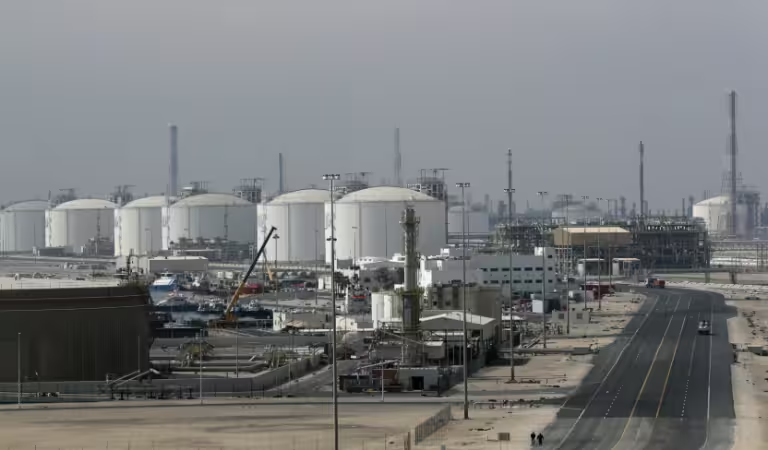
At least 3 years will be needed to bring Qatar’s Ras Laffan gas complex back to full operation after Iranian strikes hit it in March, CBS News reported on its 60 Minutes program. The scale of the damage to the site’s helium production units has not been established.
· Originally published by ontime+ · Last verified: 19 Oct 2026 (Ahmed Kawah)
Key Points
- Ras Laffan will take at least 3 years to return to full operation, CBS reported
- Damage to Qatar's helium production facilities remains undetermined, with satellite imagery inconclusive
- Helium spot prices have tripled, threatening chipmaking, MRI machines and cancer research labs
The latest:
At least 3 years will be needed to bring Qatar’s Ras Laffan gas complex back to full operation after Iranian strikes hit it in March, CBS News reported on its 60 Minutes program. The scale of the damage to the site’s helium production units has not been established. Ras Laffan is not only a liquefied natural gas export hub but a critical source of the world’s helium.
Details:
- The facility: Ras Laffan serves as both a primary LNG export terminal and a central helium production site, according to the program. Helium from the complex feeds semiconductor manufacturing, smartphones, automobiles, MRI scanners and missile systems — industries with no ready substitute for the gas.
- The shipping chokepoint: The closure of the Strait of Hormuz since February disrupted access to roughly one third of global helium supply, the program reported, before the Iranian strikes on Ras Laffan compounded the shortage. Navigation through the strait remains disrupted.
- No official answer: The program said its requests for detailed information on the damage to Qatar’s helium production infrastructure went unanswered. No Qatari assessment of the condition of the helium units has been made public.
- The imagery: 60 Minutes turned to Joe Bermudez, senior satellite imagery analyst at the Center for Strategic and International Studies, who examined two images of a helium-linked area inside Ras Laffan — one taken before the attacks, the other four days after.
- What was visible: Bermudez identified black marks on the ground that could have come from dried water or firefighting foam used near pipes and equipment. He stated the images were not sufficient to determine the nature or severity of the damage.
- The price move: Helium spot prices have tripled since the war began, according to the report. United States helium exports rose 70% as American producers moved to cover part of the global shortfall.
- The chip warning: Semiconductor industry officials quoted by the program warned that a prolonged helium shortage could disrupt production of the chips used in artificial intelligence data centers and advanced technology manufacturing.
- The laboratories: Researchers at the University of Chicago told the program they fear having to shut down scientific equipment that depends on helium, including instruments used in cancer and Alzheimer’s research.
- The American limit: The United States is a major helium producer but cannot offset the loss of Qatari supply indefinitely, the report said, particularly while shipping through the Strait of Hormuz remains unsettled.
Background:
Qatar is among the world’s largest helium exporters alongside its position in liquefied natural gas. Helium is extracted as a byproduct of natural gas processing, which ties the gas produced at Ras Laffan directly to global supply of the element.
Between the lines:
The report’s own conclusion is that the consequences of striking Ras Laffan reach past Qatari energy exports into technology supply chains, scientific research and advanced manufacturing worldwide. The 3-year repair horizon and the unresolved state of the helium units together suggest a shortage measured in years, not months, with the 70% jump in American exports covering only part of the gap.
What’s next
Watch for a Qatari assessment of damage to the helium units, any reopening of the Strait of Hormuz, and whether semiconductor manufacturers announce production slowdowns tied to helium supply.