Qatari LNG tanker runs the Red Sea to reach Poland
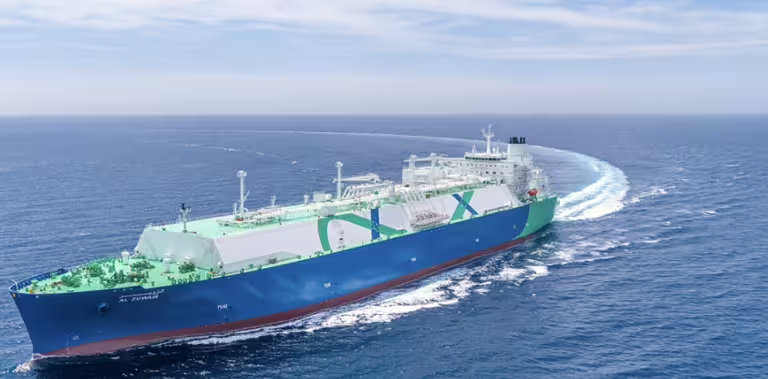
An LNG carrier loaded in Qatar in August is sailing north through the Red Sea and signaling Poland as its next destination, according to ship-tracking data compiled by Bloomberg. The route is a rare one for gas shipments, which have largely avoided waters exposed to Houthi attacks.
· Originally published by ontime+ · Source: Bloomberg · Last verified: 19 Oct 2026
Key Points
- A Qatar-loaded LNG carrier is sailing north through the Red Sea toward Poland, ship-tracking data shows.
- Most commercial ships now detour around Africa, adding nearly two weeks to Europe-bound voyages.
- The shortcut lands as European gas prices hit a near four-year high with storage unusually low.
The latest:
An LNG carrier loaded in Qatar in August is sailing north through the Red Sea and signaling Poland as its next destination, according to ship-tracking data compiled by Bloomberg. The route is a rare one for gas shipments, which have largely avoided waters exposed to Houthi attacks. It comes with European gas prices at their highest in almost four years.
Details:
- The route: Commercial vessels heading to Europe have increasingly sailed around Africa’s Cape of Good Hope instead of transiting the Red Sea, a detour that can add close to two weeks to a one-way voyage along with extra costs. The tanker now in the Red Sea is bypassing that detour.
- The buyer: Poland’s Orlen SA holds a long-term supply contract with QatarEnergy. Shipments under that deal were canceled after drone strikes hit the exporter’s giant Ras Laffan plant in March, according to Bloomberg. QatarEnergy did not immediately respond to requests for comment.
- The incident: UK Maritime Trade Operations, which links commercial shipping with military forces, reported on Saturday that an unnamed LNG tanker was approached southeast of the Yemeni port of Al Mukalla, in the Gulf of Aden, by a skiff that fired two shots. The tanker’s security team fired two shots back.
- The identification: UKMTO did not provide further details on the vessel involved. Ship-tracking data suggest the Poland-bound carrier was the only LNG tanker in the region at the time, and that the ship has since continued its journey north.
- The price backdrop: European natural gas prices have climbed to their highest level in almost four years. Continued disruption around the Strait of Hormuz has tightened global LNG supply for months, pushing prices up and forcing Middle Eastern suppliers to search for workarounds.
- The storage problem: Europe has struggled to refill its gas inventories before winter. Reserves are sitting at the lowest seasonal level in more than a decade, which threatens still higher prices as temperatures fall across the continent.
- The Qatari position: Qatar has been reworking its shipping approach, leaning on older tankers and new tactics to keep cargoes moving. The country has not laid out whether the Red Sea transit marks a broader change of routing policy for its fleet.
Background:
Houthi forces have attacked commercial shipping in the Red Sea and Gulf of Aden, pushing much of the industry onto the far longer Cape of Good Hope route. Qatar’s Ras Laffan export plant was struck by drones in March, interrupting contracted deliveries.
Between the lines:
The calculation behind the transit is visible in the numbers already on the table: a two-week saving matters far more when European prices are at a four-year high and storage sits at a decade low. The skiff incident off Al Mukalla shows what that shortcut costs in risk, and whether other carriers follow will depend on how the math holds.
What’s next
Watch whether the cargo discharges in Poland on schedule, whether Orlen and QatarEnergy resume contracted shipments after the Ras Laffan strikes, and whether further UKMTO reports flag incidents involving LNG tankers in the Gulf of Aden.