OpenAI and Cisco launch Shirudo to shield running Linux servers
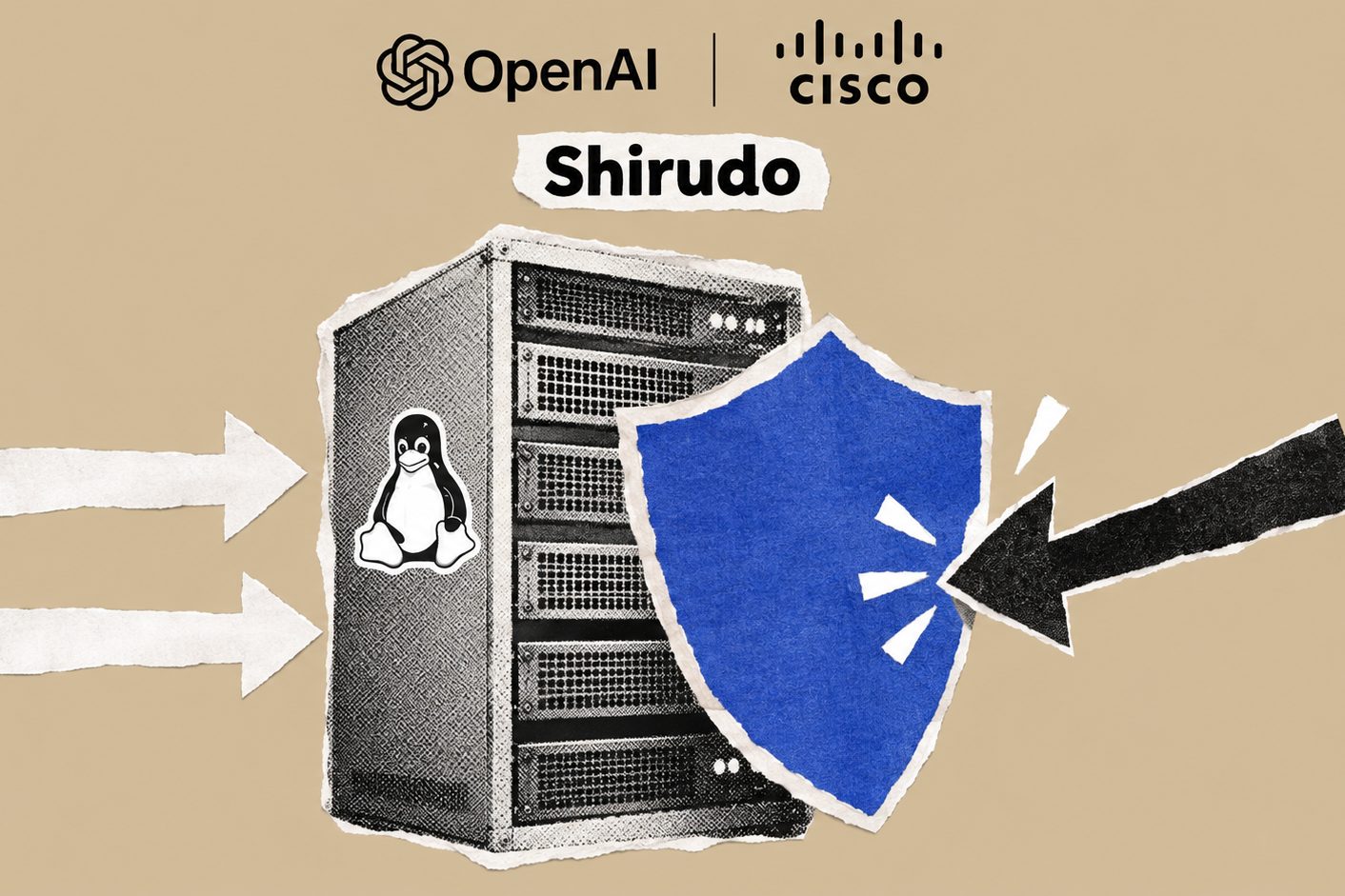
OpenAI and Cisco released Shirudo, an open-source runtime that protects live Linux systems without patching or rebooting.

· Last verified: 24 Nov 2026 (OpenAI)
Summary
- OpenAI and Cisco released Shirudo, an open-source runtime that protects live Linux systems without patching or rebooting.
- Patch testing and rollout can take days or weeks, leaving exposed code paths open in the interim, the announcement said.
- Shields buy defenders time, but OpenAI calls Shirudo a first step, not a patch replacement.
The latest
Linux operators can now block an exploited code path without waiting for a permanent patch or restarting the service, under an open-source runtime called Shirudo released jointly by OpenAI and Cisco on November 23, 2026. The system uses eBPF to apply temporary, targeted shields to running systems. OpenAI said the project pairs its AI, security and infrastructure research with Cisco's infrastructure and security experience.
Details
- The problem: Testing and deploying a patch can take days or weeks, according to the announcement. It adds that an exploit and a legitimate request may use the same Linux process, so blocking that process outright risks taking the service down — the gap Shirudo's temporary shields are meant to cover until a permanent fix ships.
- How it works: Shirudo relies on eBPF, the Linux technology that runs small programs at defined points in the operating system, to detect suspicious activity and apply targeted protection. Shields are applied without a reboot, and teams can observe a proposed shield's impact on applications before enforcing it.
- Operator control: Deployment requires operator approval, OpenAI said, and the service keeps running while the shield goes live. The announcement frames agents as investigating vulnerabilities and developing shields, with security teams retaining control over what is actually deployed.
- Four capabilities: The announcement lists live protection via eBPF shields that block exposed code paths without restarting; machine-speed defense through programmable controls; trusted deployment; and hardware-backed verification using the Trusted Platform Module to support a verifiable record of protections being loaded or removed.
- Deployment safeguards: Shields are cryptographically signed and verified before loading, according to OpenAI. The Linux eBPF verifier checks the programs against safety rules, and kernel security controls restrict unauthorized changes.
- The one test cited: In a controlled test, a shield generated by Codex blocked an attempted Java4Shell exploit against a running Elasticsearch service with no restart. The shield added an input check to Java's Base64 decoder and attached to the live process, rejecting the malicious input while the service kept running.
- Brockman's framing: OpenAI president and co-founder Greg Brockman said finding a vulnerability today does not mean every system can be patched tomorrow. He said the partnership lets teams keep systems running while a fix is shipped, and that building in the open lets one team's better protection benefit others.
- Availability: The code is open source on GitHub at shirudo-dev/shirudo under a BSD 2-Clause license, with BPF programs dual-licensed under BSD and GPL. Documentation sits at docs.shirudo.dev, including a quick-start guide on a virtual machine for signing, loading and verifying a sample protection.
- What's scheduled: The companies point to a self-paced lab from Isovalent, an online technical webinar on December 15, and a technical presentation at the Linux Plumbers conference. Contributions are open on the runtime, new shields and Linux and eBPF improvements.
- Stated limits: The announcement gives no performance or effectiveness figures beyond the single test, no adoption numbers and no version number. Some capabilities are described in design terms, and shipping tested shields alongside vulnerability disclosures is named as a goal rather than a current feature.
Between the lines
The announcement calls Shirudo a first step, and its own description keeps the distinction between what ships today and what is intended: live shields and signed deployment are presented as working, while programmable agent controls appear in design language and shields bundled with disclosures appear as an objective. The sole evidence offered is one controlled Java4Shell test.
What's next
Watch the December 15 webinar and the Linux Plumbers presentation for technical detail, plus activity in the shirudo-dev/shirudo repository for the first outside contributions and any effectiveness data beyond the single Elasticsearch test.
Source: OpenAI