Iraq lost $60bn in oil revenue since Iran war, PM says
Prime Minister Ali al-Zaidi says Iraq lost roughly $60bn in oil revenues since the war began.
Summary
- Prime Minister Ali al-Zaidi says Iraq lost roughly $60bn in oil revenues since the war began.
- Oil funds more than 90 percent of the federal budget; Hormuz disruption blocked most Gulf export routes.
- Central bank reserves and the dinar are now the pressure points for import-dependent households.
The latest
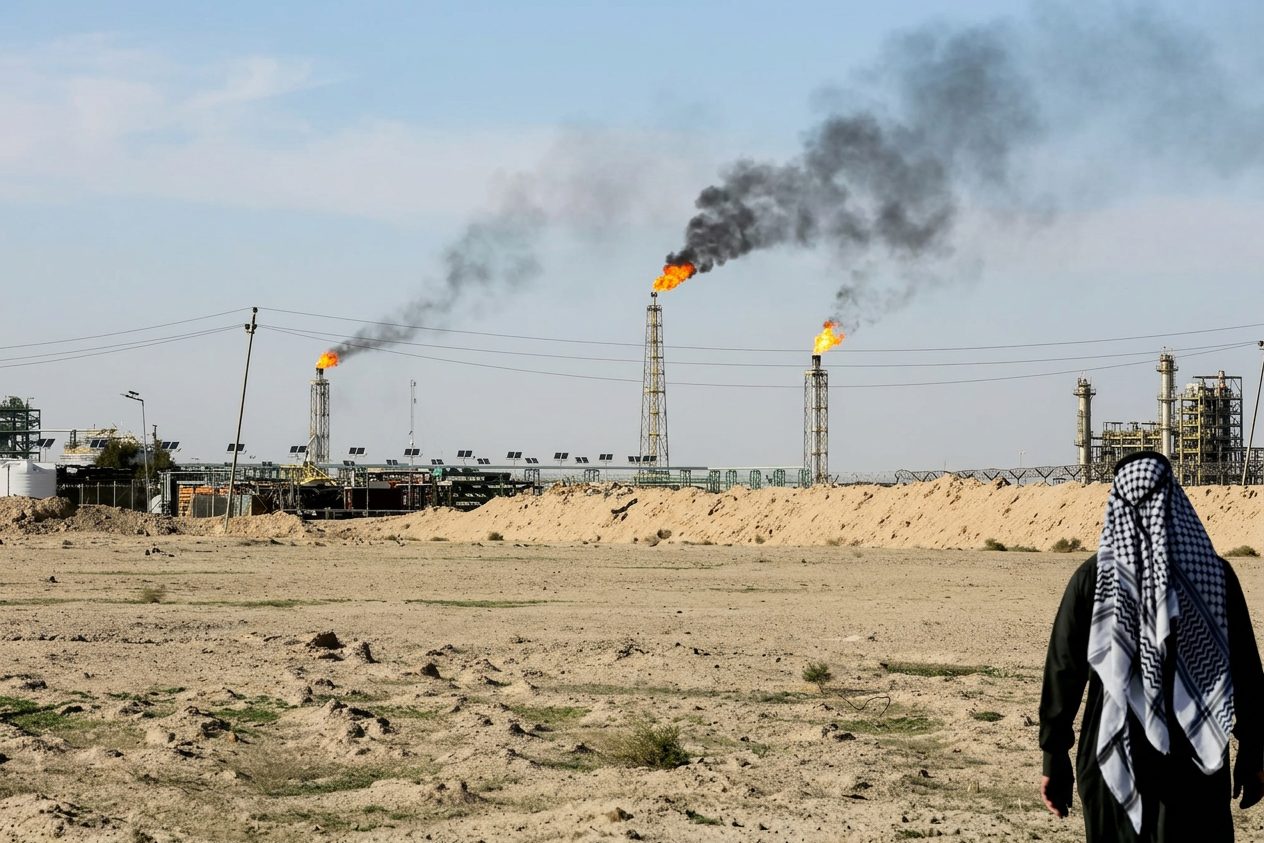
Iraq has lost about $60bn in oil revenues since the US-Israeli war on Iran began in late February, Prime Minister Ali al-Zaidi said this week, after the country was unable to ship roughly 90 percent of its crude through its usual Gulf routes for a period. Al-Zaidi described Iraq as facing extraordinary economic challenges. Oil supplies more than 90 percent of the federal budget.
Details
- The revenue shock: Al-Zaidi said the $60bn loss followed the closure of free trade flows through the Strait of Hormuz, the corridor carrying most Iraqi trade. For a period the country could not export about 90 percent of its oil through customary Gulf routes, according to Al Jazeera. The prime minister did not set out a recovery timeline.
- The reserves figure: Mudher Mohammed Salih, financial adviser to the prime minister, said in a television interview this week that the Central Bank of Iraq's foreign reserves fell from about $106bn before the war to roughly $80bn by late August — a drop of some $26bn in six months, according to Al Jazeera.
- The central bank's denial: The Central Bank of Iraq said in a Saturday statement that it faces no dollar shortage and holds "sufficient foreign reserves to meet all demands for foreign currency," including trade financing. It did not address the reserve figure cited by the prime minister's own adviser.
- Two exchange rates: The dollar climbed to about 1,600 dinars on the parallel market last week before easing to roughly 1,575 this week, up from about 1,540 before the war, Al Jazeera reported. The official rate remains near 1,300 dinars, leaving a gap of more than 20 percent between the two.
- Who Baghdad blames: The central bank attributed the parallel-market rise to speculation, expectations and the misuse of regional geopolitical conditions by certain parties. It did not name those parties, nor did it announce intervention measures to narrow the gap.
- The import squeeze: Iraq depends on imports for food, medicine, appliances and industrial raw materials. Rerouting around Hormuz has lengthened transport times, raised costs for businesses and consumers, and cut the overall volume of goods arriving, according to Al Jazeera.
- On the shelves: A Baghdad supermarket owner said imported goods now make up 70 percent of what he sells, down from 90 percent before the war, and that prices of imported items rose 25 to 30 percent. Goods shipped from China face delays of up to three months as importers take longer routes.
- The economist's reading: Ziad al-Hashimi of Anglia Ruskin University assessed that the crisis exposed deep structural imbalances in Iraq's economy, above all its dual dependence on oil revenues and imported goods. He judged the government's options limited to short-term measures such as borrowing.
Background
Iraq historically ran a trade surplus because oil export earnings offset its heavy import bill. That arithmetic broke when most trade through the Strait of Hormuz, the route carrying the bulk of Iraqi cargo, stopped flowing freely after the war began in late February.
Between the lines
Two official accounts sit side by side. The prime minister's own financial adviser puts reserves down about $26bn; the central bank says reserves are sufficient and points to speculators for the dinar's slide. Both cannot fully hold. With oil funding over 90 percent of the budget and the parallel rate more than 20 percent above the official one, the currency gap is where that contradiction gets settled.
What's next
Watch the parallel-market rate against the 1,600-dinar level, whether the central bank publishes updated reserve figures, and whether Baghdad turns to borrowing as al-Hashimi expects.
Source: Al Jazeera