FBI warns AI agent platform ARTEX breached networks in under 3 hours
FBI FLASH alert says attackers used open-source AI agent platform ARTEX to automate intrusions since August 2026.

· Last verified: 16 Nov 2026 (FBI / IC3)
Summary
- FBI FLASH alert says attackers used open-source AI agent platform ARTEX to automate intrusions since August 2026.
- Some breaches moved from initial targeting to privileged access in under 3 hours, the bureau said.
- Finance, government and energy networks are exposed, pushing defenders to lock down cloud and partner gateways.
The latest
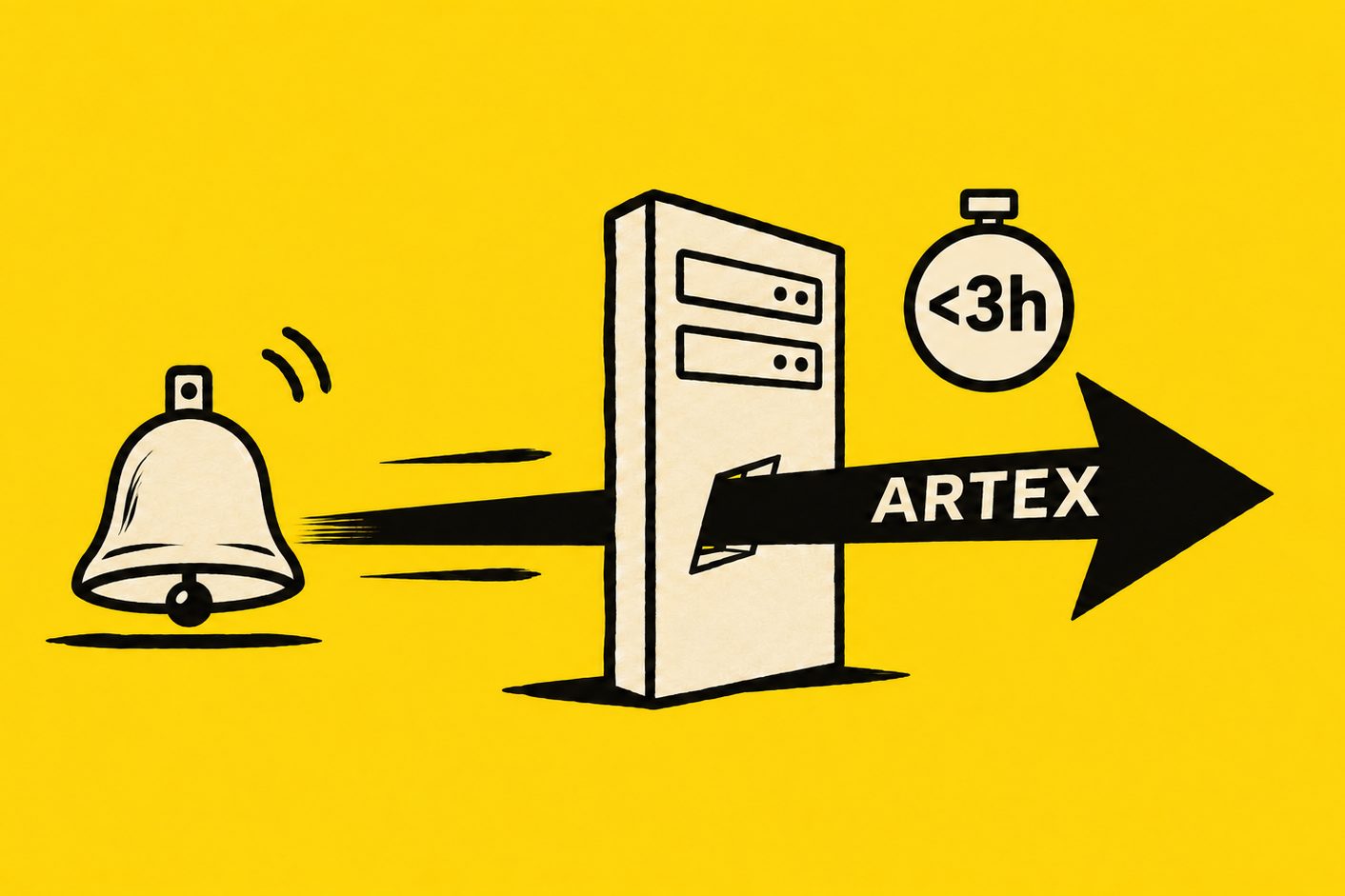
Attackers have been running automated intrusions through ARTEX, an open-source multi-agent platform built on large language models, the FBI said in a FLASH alert issued on November 13, 2026. The bureau, publishing the notice as FLASH-20261113-001 on its IC3 portal under TLP:CLEAR, said the tool compresses attack timelines so sharply that some operations reached privileged access in under 3 hours.
Details
- What ARTEX is: According to the alert, ARTEX is an autonomous multi-agent penetration-testing platform written in Go that converts objectives phrased in natural language into machine-executed commands. It ships with no model of its own, connecting instead to external providers and leaving the operator to supply the intelligence layer.
- Origin and spread: A developer using the name Autumn-27 published ARTEX on GitHub in July 2026, describing it as a tool for authorized testing, and pulled the repository on October 8, 2026. The FBI said it remains widely available through forks, mirrors, archived copies and a commercial edition marketed as ARTEX PRO.
- The numbers: The project drew roughly 1,500 to 2,000 GitHub stars within 10 weeks, the bureau said. Researchers counted more than 1,600 publicly exposed ARTEX control panels by early November 2026, and the FBI assessed the true number of deployed instances is likely higher than external scanning captured.
- The speed problem: The alert said ARTEX sharply reduces the time needed to chain attack techniques, lets small groups run many intrusions simultaneously, and enables operators with limited skill to execute complex multi-target campaigns. Its traffic is noisy, but the pace leaves defenders a narrow response window.
- Named campaigns: The bureau cited financially motivated attacks on South Korean financial institutions that exposed personal data on about 67,000 people, and a supply-chain compromise of the ConnectWise Cloud Backup service that opened access to more than 2,250 downstream tenants.
- Models in use: Operators drew on frontier models including Anthropic Claude and OpenAI GPT alongside open-source and Chinese-origin models such as DeepSeek, GLM, Grok and Kimi. Most attacker-run instances used the DeepSeek Flash family for its capability, low cost and weaker apparent guardrails when a task is framed as penetration testing.
- Techniques observed: Mapped to MITRE ATT&CK, the activity included active scanning and cloud account enumeration, Azure credential testing, web path scanning exceeding 500 requests, and exploitation of unsigned SAML assertions, XXE, SSRF, SQL injection, command injection, SSTI, IDOR and authentication bypass.
- Inside the network: The FBI documented JSP and PHP web shells, abuse of Kudu interfaces, deployment of WISP, vshell and AdaptixC2, privilege escalation via Kerberoasting and DCSync, enumeration of more than 110,000 Active Directory objects, LAPS password reads, and hunting for hosts without CrowdStrike Falcon installed.
- Exfiltration and indicators: Attackers created 100-gigabyte storage volumes to stage data and pushed it to rotating webhook.site endpoints, with command and control through residential proxies, Tor, SOCKS proxies, Chisel and SoftEther. The alert lists IP addresses, the domain xcai[.]pro, and outbound calls to api.anthropic.com, api.deepseek.com, open.bigmodel.cn and api.x.ai.
- What defenders are told: Recommendations include inventorying internet-facing systems including partner portals and legacy services, restricting cloud management and Kudu endpoints to trusted networks, enforcing least privilege on multi-tenant applications, and rotating embedded secrets. The bureau urged validating indicators before blocking, since cloud IPs are reassigned.
- ConnectWise instructions: Organizations should audit every Microsoft 365 tenant where affected ConnectWise applications were installed and review related activity back to at least October 1, 2026. The FBI said affected connections should stay disabled until ConnectWise issues restoration guidance, and warned against deleting enterprise applications as a first response.
Background
The FLASH format is the FBI's channel for pushing technical indicators to network defenders. The TLP:CLEAR marking on this notice permits unrestricted redistribution, and the bureau directed victims to report through its field offices or ic3.gov.
Between the lines
The alert's own framing points at a shift in who can mount a serious intrusion. ARTEX carries no model, so its power comes from whichever provider it is pointed at — and the preference for DeepSeek Flash tracks cost and weak guardrails rather than raw capability. With more than 1,600 panels exposed and the code mirrored after takedown, removal of the original repository changed little.
What's next
ConnectWise restoration guidance remains outstanding, keeping affected Microsoft 365 connections disabled. Watch whether model providers restrict API access tied to the listed endpoints, and whether exposed ARTEX panel counts fall after the alert.
Source: FBI / IC3