Anthropic cuts vulnerability disclosure window to 30 days from 90
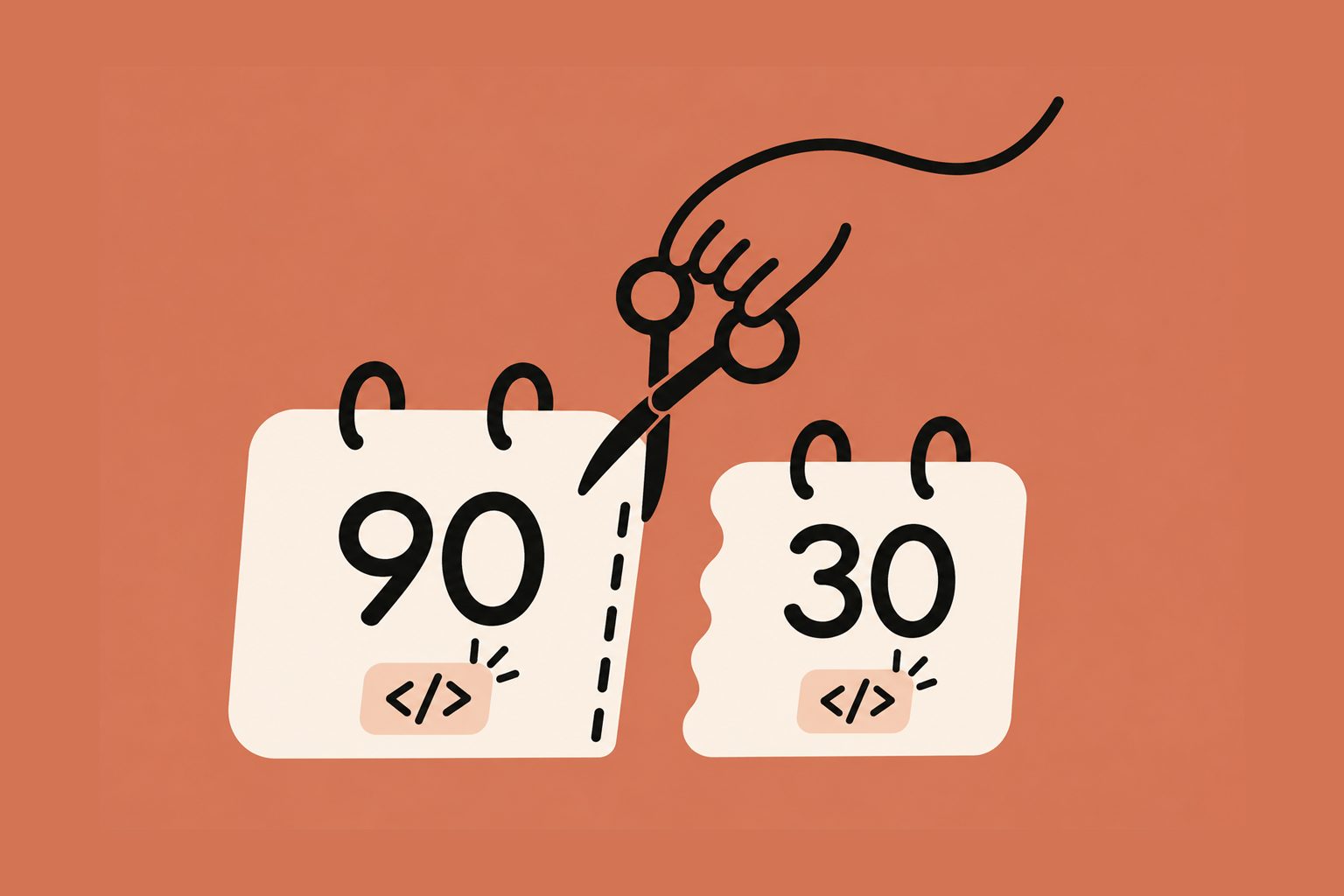
Anthropic's Frontier Red Team will publish critical bugs 30 days after reporting, down from 90.

· Last verified: 17 Nov 2026 (Anthropic)
Summary
- Anthropic's Frontier Red Team will publish critical bugs 30 days after reporting, down from 90.
- Routine flaws get 45 days; the 7-day window for actively exploited bugs is unchanged.
- Open-source maintainers and companies relying on their code face a far tighter patching clock.
The latest
Severe security flaws found by Anthropic's AI models will be made public 30 days after they are reported to a project's maintainers, down from 90, the company's Frontier Red Team announced on Monday, 16 November 2026. Lower-severity findings move to a 45-day clock. Anthropic said frontier models are now surfacing vulnerabilities faster, and that the same bugs are being independently rediscovered at rising rates.
Details
- The new clocks: High-severity and critical vulnerabilities will be disclosed 30 days after the initial report instead of 90, according to Anthropic. All other findings move to 45 days. The existing 7-day window for vulnerabilities already being exploited in the wild stays as it is.
- Escalation path: If a maintainer does not respond to the first report, Anthropic will hand the case to an external vulnerability coordinator after 15 days rather than 30. Once a patch exists, the company says it will wait 30 days before releasing full technical details, down from 45.
- Effective date: The shortened timelines apply to vulnerabilities reported on or after 1 January 2027, Anthropic said. Reports already in progress on that date keep the timeline they were filed under, so maintainers currently working through Anthropic findings are not retroactively moved onto the faster clock.
- The backlog: High-severity and critical bugs that have already blown past the old 90-day window without being announced get one additional 30-day grace period. After that, Anthropic says it will publish them on its tracking dashboard starting 1 January 2027.
- The stated reason: Anthropic wrote that "A 90-day window made sense when a vulnerability could be expected to stay private for months. We no longer believe it can." The company argues the speed at which frontier models find flaws has collapsed the assumption that secrecy holds.
- Carve-outs: Software where patches are hard to deploy, such as critical infrastructure code, and flaws requiring a change to a technical specification or standard (RFC) may get a schedule negotiated with the vendor. Anthropic said the timelines do not apply to AI findings no human has reviewed, including raw OSS Scanner output.
- Support for maintainers: Anthropic said it intends to send actionable remediation guidance with every report, supply a patch or mitigation where it can, and agree a sustainable reporting pace with a maintainer before dropping a large batch of findings on a volunteer-run project.
- The side programs: OSS Scanner is a free service that periodically scans critical open-source projects with Anthropic's strongest models and routes results straight to the maintainer. The Claude for Open Source Program offers eligible maintainers and contributors six months of Claude Ultra at no cost.
- Defensive access: A Cyber Verification Program lets security professionals, including open-source maintainers, apply for adjusted Claude controls tuned to legitimate defensive work — an acknowledgment that standard safety guardrails can obstruct the people doing security research.
Background
Coordinated disclosure has long run on a 90-day norm popularized by corporate security research teams: report privately, give the maintainer time to patch, then publish. Anthropic's change breaks from that benchmark on the argument that AI-assisted discovery has made the old assumption obsolete.
Between the lines
The burden lands unevenly. Anthropic is scanning critical open-source code with its strongest models, but much of that code is maintained by unpaid volunteers who now have 30 days to ship a fix before details go public. The free Claude Ultra offer, the pledged patches and the promise to negotiate reporting pace read as an attempt to offset that asymmetry — Anthropic sets the clock and supplies the tooling to beat it.
What's next
1 January 2027 is the trigger date: new reports fall under the shortened timelines, and overdue high-severity findings begin appearing on Anthropic's public dashboard. Watch for responses from major open-source foundations and maintainers before then.
Source: Anthropic