China's car sales head for worst year since 2014, down 22%
Chinese passenger-vehicle purchases fell about 22% through September, with full-year sales projected at 18.5 million.
· Last verified: 28 Oct 2026 (The Wall Street Journal)
Summary
- Chinese passenger-vehicle purchases fell about 22% through September, with full-year sales projected at 18.5 million.
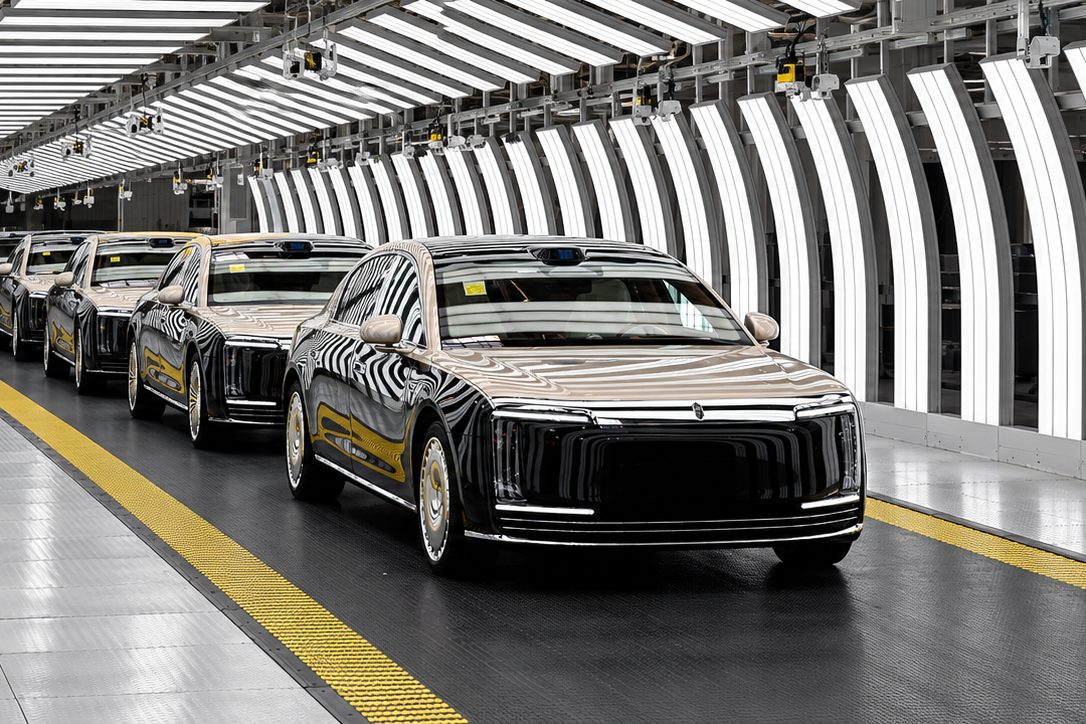
- Local governments funded 143 EV brands, leaving plant capacity near triple expected domestic demand.
- Carmakers are cutting prices and exporting, pushing job losses onto Volkswagen, BMW and Stellantis in Europe.
The latest
Chinese consumers bought roughly 22% fewer passenger vehicles through September than a year earlier, and the head of a major Chinese car-industry group said this week that full-year sales would likely reach only 18.5 million vehicles, the worst showing since 2014. The consolidation the sector needs has not started, according to The Wall Street Journal, because local-government money keeps failing brands nominally alive.
Details
- The capacity gap: China has plants capable of building around 63 million light vehicles a year, according to data provider Mobility Global — more than triple what Chinese consumers are expected to buy in 2026. The number of Chinese EV brands selling at least one product hit a record 143 at the end of 2025, by AlixPartners' tally.
- The zombie case: Skyworth Auto said in 2021 its main EV plant could build 100,000 vehicles a year; it sold 660 in China through September, the Journal reported. At two Nanjing dealerships this summer a reporter found no cars, no customers and no employees, while a listed Shanghai outlet was long-defunct.
- The state's hand: A district government in Nanjing owns 5% of the maker of Skyworth passenger EVs, according to Chinese information provider Tianyancha. That government's website said a year ago the business had received comprehensive support from government departments and concierge-style service clearing development obstacles.
- The price war: Chinese vehicle prices have fallen by almost one-fifth since the start of 2023, AlixPartners said. Industry profit margin dropped to a multiyear low of 3.6% in the first eight months of the year, according to the China Passenger Car Association. The average Chinese EV brand sold about 87,000 vehicles last year.
- The export surge: China is on track to export 12 million vehicles this year, the car association's head said, up from roughly a million annually at the start of the decade. The five largest Chinese players took an 11.7% share in Europe in September. BYD prices its Seal hybrid sedan in the UK around $44,000.
- The damage abroad: Volkswagen is running its second major restructuring in under two years, targeting as many as 50,000 jobs, and CEO Oliver Blume wrote in an August staff memo that Chinese price points cannot be matched with European cost structures. BMW is cutting around 8,000 jobs; Stellantis is losing money in Europe partly because of Chinese competition.
- Losses mounting: NIO has lost more than $1 billion every year since 2021 and its stock is down 95% from its peak, despite Hefei's roughly $700 million bailout in early 2020. BAIC Motor, controlled by the Beijing city government, issued a profit warning in late July. Xiaomi is falling short of its sales target.
- Consolidation stalls: State-owned Dongfeng and Changan announced restructuring plans last year, fueling merger speculation, but abandoned them; analysts said neither company's hometown wanted to yield primacy. GM CEO Mary Barra told analysts in July that China has so many competitors that a lot of sorting needs to happen for long-term viability.
Background
Chinese cities poured billions into local EV champions after the technology became a national priority, each hoping to become the Detroit of the EV era. By the mid-2010s China was selling more than 20 million vehicles a year, the world's largest market. Roughly two-thirds of September sales were battery EVs or plug-in hybrids.
Between the lines
The shakeout stalls for political reasons, not commercial ones. Tu Le of Sino Auto Insights argued provincial officials are promoted on tax revenue and employment, leaving a disconnect between central planning and local behavior — which is why a brand selling 660 cars stays alive. Fengming Lu of Australian National University noted China tamed steel and aluminum overcapacity in the 2010s, but car plants employ far more people and sit deeper in local economies.
What's next
Watch whether full-year sales land at the projected 18.5 million, whether Volkswagen secures its additional half-million unit capacity cut in China, and whether Beijing's anti-involution pressure translates into enforced plant closures.
Source: The Wall Street Journal