Three Trump Energy Department alumni raise $130 million for modular data centers
Mavria hit a $1 billion valuation on $130 million raised to mass-produce truck-shipped data centers.
· Last verified: 9 Nov 2026 (The Wall Street Journal)
Summary
- Mavria hit a $1 billion valuation on $130 million raised to mass-produce truck-shipped data centers.
- Its three founders met at the Energy Department working on nuclear reform under the Trump administration.
- Power access and equipment delays are now the main bottleneck slowing AI data-center construction.
The latest
A Texas startup founded over the summer by three veterans of President Trump's Energy Department has reached a $1 billion valuation after raising $130 million, aiming to factory-build standardized data centers and ship them by truck. Mavria's founders told The Wall Street Journal they identified U.S. power infrastructure, manufacturing capacity and supply chains as unprepared for AI demand while working in government.
Details
- The founders: Adam Blake, Nick Poradek and Seth Cohen met at the Energy Department and founded Mavria over the summer, according to The Wall Street Journal. Blake previously built commercial solar and software companies and entered the department through the Department of Government Efficiency's recruitment of tech founders.
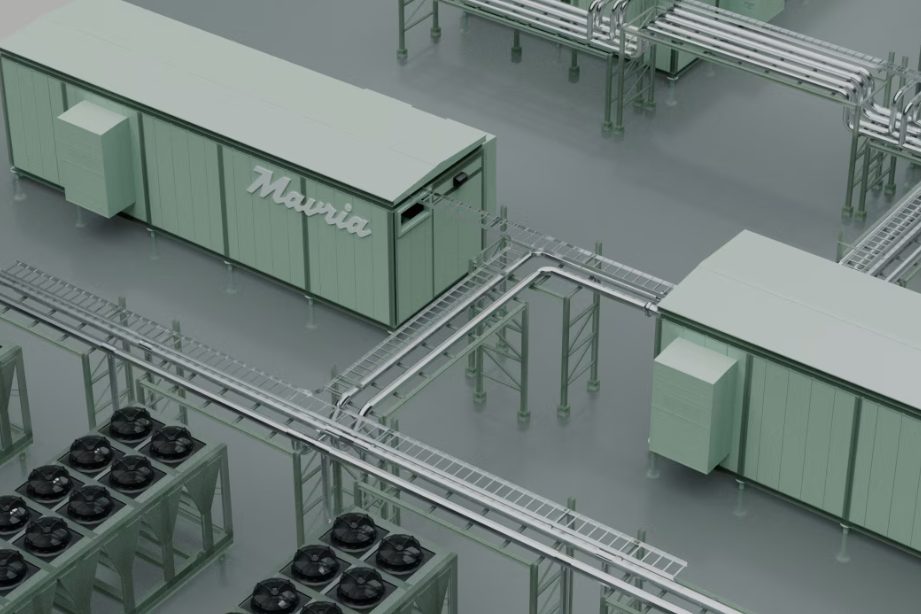
- The product: Mavria's system, called Terrain, is a modular 5-megawatt data-center unit bundling power distribution, direct liquid cooling, controls and server racks. Poradek said it is almost entirely built in a factory then plugged in on site, with units stackable at larger locations.
- The grid angle: Because the units are small, Mavria says they can absorb spare capacity on local distribution lines, sidestepping the multiyear interconnection queues larger data centers face. The company will sell equipment outright or fully develop and operate powered sites itself.
- Government roles: Poradek and Cohen were political appointees. Poradek, who co-founded an oil-field equipment manufacturer later sold to Energy Secretary Chris Wright's Liberty Energy, served as senior adviser to the secretary. Cohen, a lawyer, was chief counsel for nuclear policy at the department.
- Nuclear track record: The team focused on nuclear power, including streamlining regulations and reviving a dormant Energy Department licensing program to get small modular reactors built. Their tenure coincided with DOGE's broader campaign to cut spending, staffing and grants across the department.
- The backers: Investors include Paradigm, Liquid 2, Critical Frontier and AMP, a public-benefit corporation. Paradigm managing partner Alana Palmedo said Mavria's edge is speed of delivery at a smaller scale, arguing local residents are resisting mega-projects they do not want nearby.
- The timeline: The first unit is under construction at a Houston factory. Mavria, which employs 35 people, plans to begin testing in early 2027 and scale up production by midyear. The company has not disclosed customer commitments or a production target.
- The market framing: Anjney Midha, an AMP founder and early angel investor in Anthropic, said the AI story is an infrastructure story and called modular construction an approach the industry is increasingly adopting. He framed the build-out as a daunting competitive challenge against China.
Background
Electricity supply and hard-to-source equipment have become primary obstacles to new data-center construction in the United States, with grid interconnection waits stretching years. Modular factory-built designs are being pitched across the sector as a way around both constraints.
Between the lines
The pitch stacks two bets. One is technical: that 5-megawatt units plugged into spare distribution capacity beat waiting in interconnection queues. The other is political — founders who spent their government tenure loosening nuclear and energy rules are now selling into the bottleneck they identified from inside. Paradigm's argument that smaller sites draw less local opposition suggests permitting friction, not just power, is being treated as a selling point.
What's next
Testing of the first Houston-built Terrain unit is slated for early 2027, with production scaling targeted by midyear. Watch for Mavria's first announced customer and whether utilities grant distribution-level interconnections at the speed the company projects.
Source: The Wall Street Journal