Nvidia unveils Rubin HPC chip with 50,000-plus CUDA cores for 2028
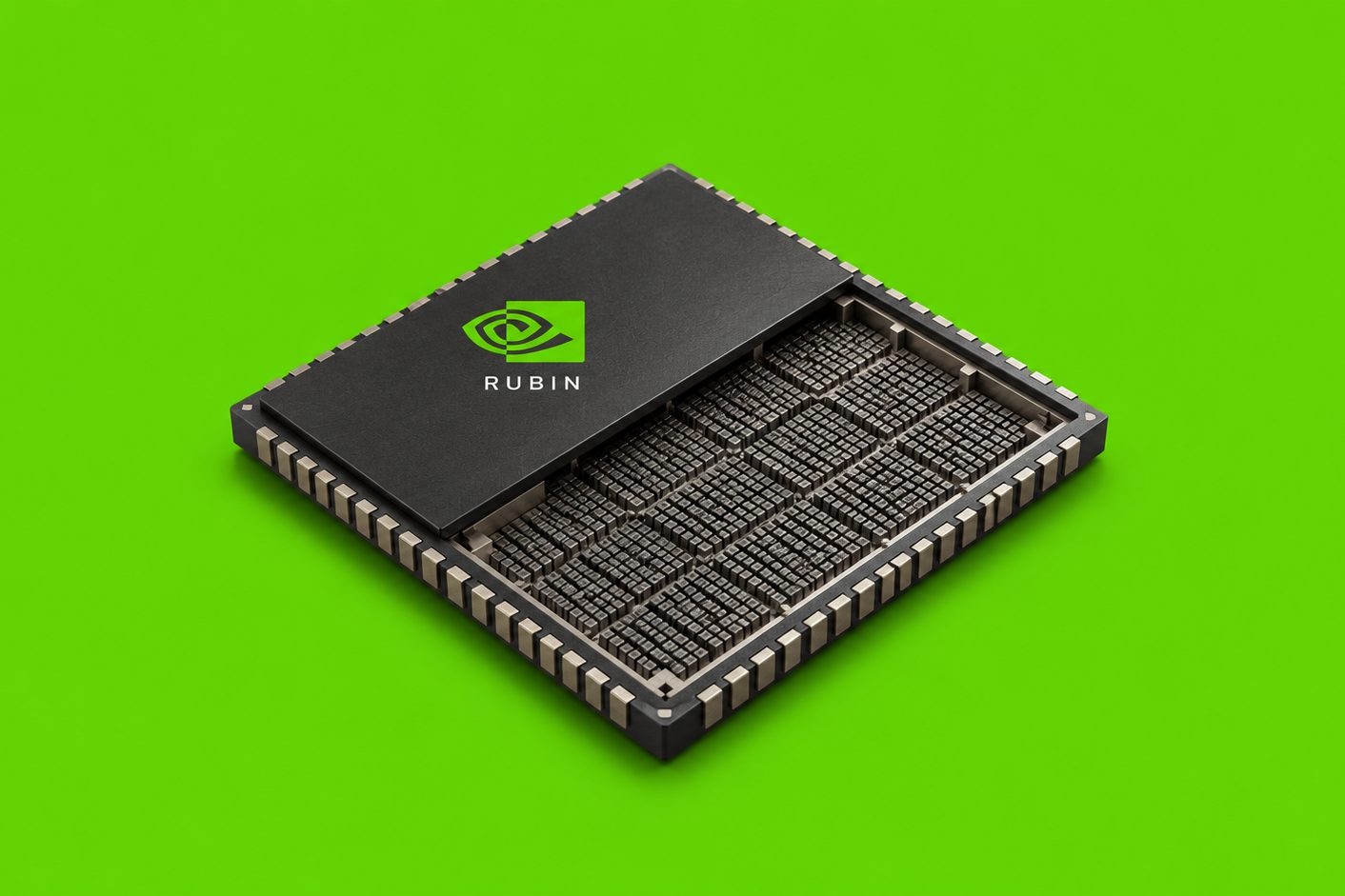
Nvidia announced Rubin HPC, a GPU built for simulation, science and analytics workloads.

· Last verified: 17 Nov 2026 (Nvidia)
Summary
- Nvidia announced Rubin HPC, a GPU built for simulation, science and analytics workloads.
- The chip carries more than 50,000 CUDA cores on a single GPU, a company record.
- Availability is set for 2028, shaping procurement plans at supercomputing centers.
The latest
More than 50,000 CUDA cores sit on a single GPU in Rubin HPC, the new processor Nvidia announced at SC26 for science, engineering and analytics workloads. The chip joins the company's Vera Rubin platform and pairs that core count with faster data movement, according to Nvidia. The company expects availability in 2028.
Details
- The hardware: Rubin HPC is a new GPU inside the Nvidia Vera Rubin platform, designed to accelerate simulation and data processing, Nvidia said. Its headline figure is a record count of more than 50,000 CUDA cores on one GPU, a measure of the parallel compute units the chip can bring to a single workload.
- Data movement: Alongside the core count, Nvidia cited a sparse data acceleration capability intended to keep those cores supplied with data rather than idle, plus seventh-generation NVLink interconnect technology to speed GPU-to-GPU connectivity. The company described the design as balanced, scaling data movement together with compute instead of raising compute alone.
- The target workloads: Nvidia listed climate models, engineering simulations, genomic analysis and financial risk as workloads sharing a common pattern: an application reaches into a vast dataset, gathers scattered values, computes a result and repeats at enormous scale. The company said the chip accelerates sparse matrix operations, stencil computations, sorting and reductions.
- The agent framing: Nvidia tied the launch to AI agents helping scientists and engineers screen more candidate materials, molecules and designs, which it said raises demand for the GPU-accelerated simulations used to evaluate those ideas. Faster simulation, the company argued, shortens the loop of hypothesis, simulation and refinement.
- The executive line: Ian Buck, Nvidia's vice president of hyperscale and high-performance computing, said "for agents tackling science and engineering, faster simulation means faster discovery." He added that the chip speeds the simulations agents use to test ideas and guide their next steps, helping researchers explore more possibilities.
- The software layer: Nvidia pointed to its CUDA-X libraries, a growing set of optimized implementations of complex algorithms covering simulation and analytics, as the companion piece. Used with Rubin HPC, the company said, the libraries give agents a faster path to reasoning outcomes — keeping the performance claim tied to Nvidia's own software stack.
- The timeline: Rubin HPC is expected to be available in 2028, roughly two years after the announcement. Nvidia did not publish pricing, power figures, memory specifications or named launch customers, and it did not disclose which supercomputing centers or system builders would deploy the chip first.
- The venue: The announcement was made at SC26, the supercomputing conference where vendors traditionally court national laboratories and research computing centers — audiences that plan hardware purchases years ahead of installation.
Background
CUDA cores are the parallel processing units inside Nvidia GPUs, and their count is one of the standard measures of a chip's raw throughput. NVLink is Nvidia's proprietary interconnect for linking GPUs directly, bypassing slower general-purpose links.
Between the lines
The two-year gap between announcement and availability is itself the message. By naming a 2028 part at a supercomputing conference, Nvidia is addressing buyers who commit to architectures long before hardware ships. The emphasis on balanced data movement rather than compute alone also signals where Nvidia believes the bottleneck now sits in scientific workloads — feeding the cores, not adding more of them.
What's next
Watch for Nvidia to disclose memory, power and pricing specifications closer to launch, and for national laboratories or system builders to name Rubin HPC in procurement announcements ahead of the 2028 availability date.
Source: Nvidia