Trump-Putin Diesel Deal Shakes Iranian Trust in Moscow
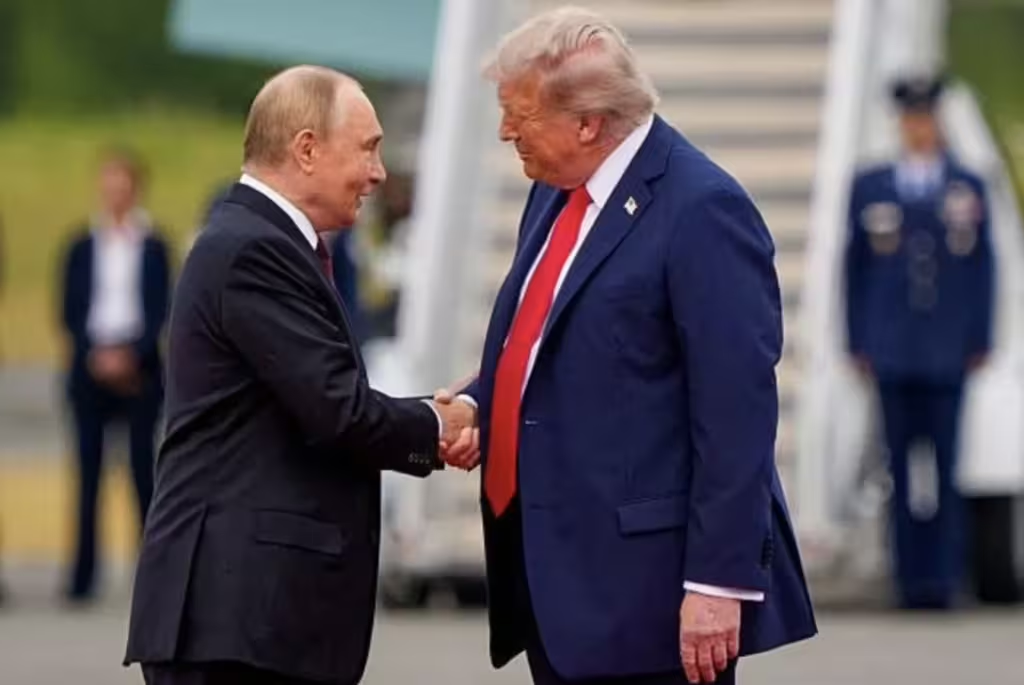
A diesel supply agreement announced by US President Donald Trump with Russian President Vladimir Putin has triggered sharp criticism inside Iran’s press, where writer Majid Moradi argued the arrangement directly serves American interests at Tehran’s expense.
· Originally published by ontime+ · Source: Associated Press · Last verified: 10 Oct 2026
Key Points
- Iranian commentators accuse Moscow of helping Washington blunt the economic cost of its war pressure on Tehran.
- Trump says Russia will ship over 3 million tons of diesel to lower US fuel prices.
- The deal tests how far Tehran can rely on Moscow when Russian interests favor Washington.
The latest:
A diesel supply agreement announced by US President Donald Trump with Russian President Vladimir Putin has triggered sharp criticism inside Iran’s press, where writer Majid Moradi argued the arrangement directly serves American interests at Tehran’s expense. Putin said Moscow is ready to supply oil and petroleum products to American and global markets, predicting a positive effect on the world economy.
Details:
- The Iranian critique: Writer Majid Moradi, in a piece published by Asr Iran and republished by Mardomsalari Online, attacked Moscow and its Iranian supporters, arguing that Putin is helping Trump sustain his war effort. The republication widened its circulation inside Iran’s reformist media space.
- Lost economic opportunity: Moradi accused Iran’s pro-Russia current of squandering chances to export Iranian gas to Europe in order to preserve good relations with Putin, framing the diesel deal as the latest case where Tehran absorbs the cost of a partnership that pays off mainly for Moscow.
- The military fear: Moradi assessed that Russian diesel entering the market would calm energy prices and therefore reduce Washington’s economic hesitation about resuming strikes on Iran. Isna carried energy specialists questioning how effective the agreement would actually be.
- The numbers: Trump said Russia would immediately ship more than 300,000 tons of diesel, followed by 500,000 tons in November, then a further million tons, with another 3 million tons to follow over a short period. He tied the supply increase to lowering fuel costs.
- The Ukrainian reaction: President Volodymyr Zelensky called it a weak decision by strong partners, according to a Ukrainian embassy statement carried by the Associated Press. He said the move lets Russia kill more and prolong the war, and that his negotiating team was being used as cover.
- Democratic backlash: Senate Democratic leader Chuck Schumer, with Jeanne Shaheen and Elizabeth Warren, called the announcement a betrayal of Ukraine, European allies and US national security, urging Trump to end his war with Iran rather than fund Russia’s war machine.
- The sanctions conflict: The deal came despite the Lindsey Graham sanctions law Trump signed last month, targeting Russian banks, officials and the shadow tanker fleet, and directing tariffs of up to 100% on the five largest buyers of Russian oil and gas. Senator Richard Blumenthal said the decision makes Washington a partner in Putin’s war.
- The election math: Trump said lowering prices for farmers, ranchers and truckers is his top priority before November’s midterms. Diesel futures fell after the announcement, but the US average stayed at 6.28 dollars a gallon, down from a record 6.52 dollars on 22 September, per the American Automobile Association.
- The Iran file: The Kremlin said Putin and Trump discussed the situation around Iran alongside Ukraine. Trump said earlier in the week he would not strike Iran again before November, citing what he described as productive talks with Tehran. Kremlin aide Yuri Ushakov declined to say whether Washington offered anything in return.
- Trade history: The United States last imported Russian diesel in March 2022, according to the Energy Information Administration, and has bought no Russian oil or gas since the Biden administration banned those imports after the invasion of Ukraine.
Background:
Before Ukrainian strikes intensified on Russian energy facilities, most seaborne Russian refined product exports went to non-EU European states, plus Africa, Asia and Brazil. Other international restrictions on Russian fuel supplies remain in force despite the new agreement.
Between the lines:
Moradi’s argument pushes the Iran-Russia relationship past energy trade to a harder question: how much can Tehran count on Moscow when Russian commercial interests point toward cooperation with Washington. His case rests on two facts already on the table — the lost European gas option, and cheaper diesel easing the economic constraint on renewed strikes against Iran. This is a writer’s political reading, not evidence of an official shift between the two capitals.
What’s next
Watch the volumes that actually reach the market and their effect on prices, whether the administration applies the Graham law’s tariff provisions, and whether criticism of Moscow widens beyond individual Iranian commentators.