Wall Street posts worst day since June as AI selloff deepens
· Originally published by ontime+ · Source: Associated Press · Last verified: 31 Oct 2026
The latest:
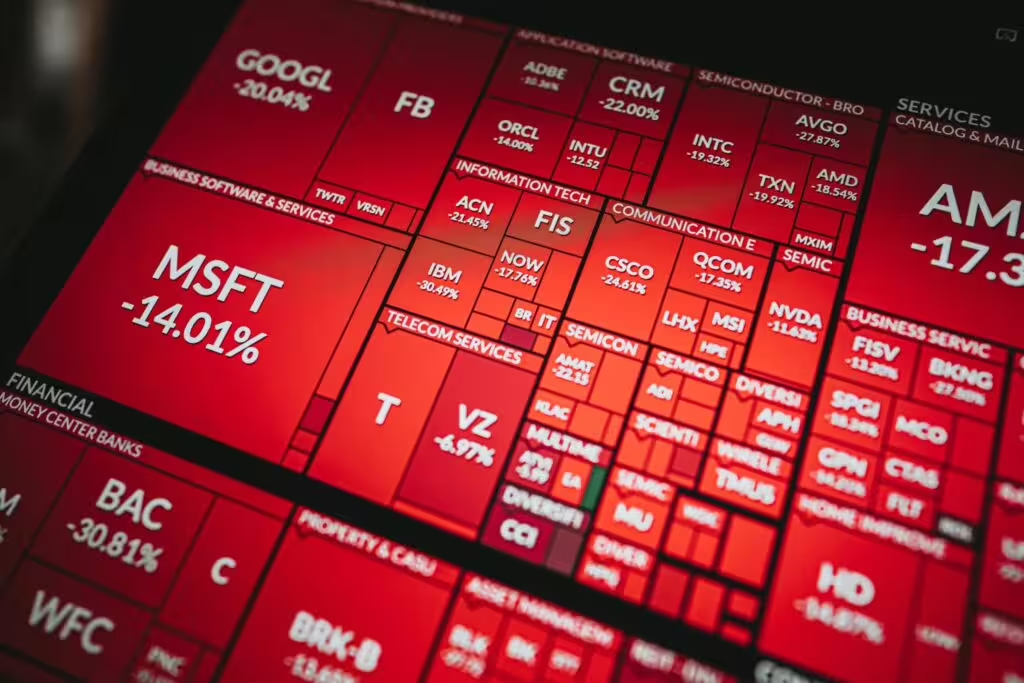
Technology shares led a broad retreat on Friday, dragging the S&P 500 down 140.32 points to 7580.07 and sealing a third straight losing week. The Nasdaq composite shed 747.73 points, or 2.9%, while the Dow Jones Industrial Average lost 572.25 points to 51770.31. The Associated Press tied the selling to fears that enthusiasm for artificial intelligence had pushed valuations too far.
Details:
- The chip damage: Intel fell 28.6%, its worst day since 1974, after guiding fourth-quarter profit below analyst forecasts and despite beating estimates for the latest quarter. Chief Executive Lip-Bu Tan said the personal computer industry remains under pressure. The Philadelphia Semiconductor Index fell 7.2%.
- Nvidia’s weight: Nvidia’s 4.2% decline was the single largest force pulling the S&P 500 lower, outweighing even Intel, according to the Associated Press. Beneficiaries of the data-center buildout came under pressure on concern that higher interest rates could slow construction.
- Amazon’s cash burn: Amazon slipped 1.4% after summer earnings missed estimates. More troubling for investors, the company reported burning through 42.4 billion dollars of cash over the past twelve months on a free cash flow basis, having spent 94.8 billion dollars on property and equipment, largely AI-related.
- Alphabet’s record drop: Alphabet fell more than 12% on Thursday, its worst day ever, after disclosing it spent more cash over the summer than in the spring. The Google and YouTube owner is down roughly 30% from its May peak, a bear market, and fell another 1.4% on Friday.
- Crypto hit: Bitcoin dropped below 77,000 dollars after trading above 86,000 earlier in the month, following a breach at Binance. A US blockchain analytics firm assessed a North Korean actor was behind the attack, which affected more than 6 billion dollars in digital assets.
- Crypto equities: Coinbase Global fell 10.6% despite beating quarterly estimates. Strategy, which says it holds about 4% of the total bitcoin supply, dropped 7.8%; it also beat forecasts and said its chief financial officer will resign next week for personal reasons.
- What held up: Outside technology, advancers nearly matched decliners in the S&P 500. Exxon Mobil rose 2.2% and Chevron added 1.8% on stronger-than-expected summer profits. Mondelez International gained 3.9% and Colgate-Palmolive 2.3% after both reported revenue and earnings above estimates.
- Bonds and oil: The 10-year Treasury yield slipped to 4.93% from 4.98% late Thursday and above 5.30% earlier in the month, a sign of demand for safer assets. Yields fell even as Brent crude rose 2.4%, near its highest level since the war with Iran began.
- Overseas: South Korea’s Kospi fell 3.5% as AI concerns hit its technology market, while Hong Kong’s Hang Seng rose 1.5%. Japan’s Nikkei 225 lost 2.1% after the Bank of Japan held rates steady, matching the Federal Reserve and the European Central Bank earlier in the week.
- The rotation: Nine of 11 S&P 500 sectors rose in October, with nearly 60 billion dollars flowing into US equity funds, according to EPFR Global. Energy gained 14% for the month; utilities and consumer staples each rose more than 10%. The index itself lost only 0.9% in October.
Background:
Alphabet is one of five giants leading AI infrastructure spending. Two others, Oracle and Meta, are already in bear markets. Microsoft rose 7.9% this year but slipped after disclosing plans to raise an additional 25 billion dollars from bond investors.
Between the lines:
The divergence is the story: money left AI names but stayed in equities, flowing into energy, utilities and staples rather than out of the market. Joe Quinlan of Merrill and Bank of America Private Bank said client conversations have shifted toward rebalancing away from concentrated AI positions. Morningstar analyst Malik Ahmed Khan described the move as a reallocation into defensive sectors while investors watch the AI trade.
What’s next
Tuesday’s US midterm elections and the continuing war with Iran are the near-term variables. Investors are also watching whether inflation accelerates and Treasury yields climb again, which would pressure the rate-sensitive sectors that rallied in October.