WSJ: AI selloff mirrors dot-com crash as S&P falls 12%
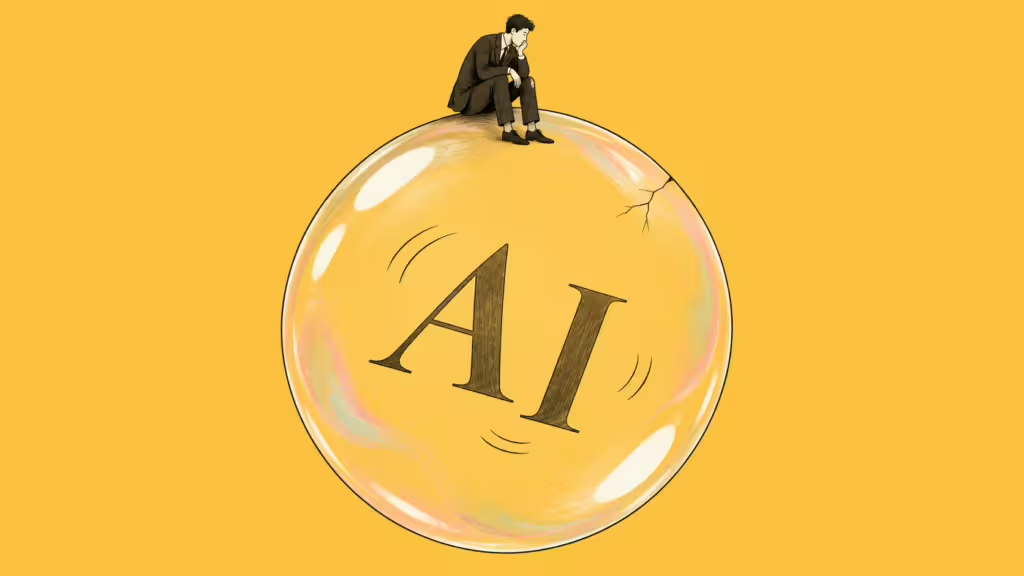
Declines across major technology stocks this year closely track the losses recorded when the dot-com bubble burst, according to a Wall Street Journal analysis by columnist James Mackintosh. Intel is down 64% from its high, against 60% in 2000, while Oracle has fallen 60% versus 37% then.

· Originally published by ontime+ · Last verified: 22 Nov 2026
Key Points
- Intel, Oracle and Nvidia have posted 2026 declines close to or worse than their 2000 crashes.
- The S&P 500 sits 12% below its intraday high, with losses concentrated in AI-linked stocks.
- Whether this was a contained mini-bubble or a broader unwind now hinges on the economy.
The latest:
Declines across major technology stocks this year closely track the losses recorded when the dot-com bubble burst, according to a Wall Street Journal analysis by columnist James Mackintosh. Intel is down 64% from its high, against 60% in 2000, while Oracle has fallen 60% versus 37% then. The S&P 500 is 12% below its intraday peak.
Details:
- The comparison: Mackintosh lined up peak-to-year-end declines for surviving dot-com era names. Micron fell 63% in 2000 against 53% this year, Qualcomm 54% against 42%, and Cisco 52% against 30%. Nvidia, down 62% in 2000, has lost 48% in 2026.
- The index damage: In 2000 the losses were broad enough to pull the S&P 500 down almost 15% from its high by year-end, even as utilities and consumer staples each gained more than 40%. This year the drop is 12%, with healthcare up 24% since late April.
- Where it concentrated: Unlike 2000, the 2026 selloff has been contained within AI-related names rather than spreading across the market. Mackintosh argues the bubble, if there was one, may have been a mini-bubble clustered around data centers and the chips built into them.
- The froth signal: Memory-chip stocks showed classic late-stage bubble behavior, with Korea the standout as leveraged retail buyers piled in at the peak. The ramp and crash were compressed into months, running from a March low after the US-Israeli strikes on Iran to a June high.
- The deflation: Micron nearly quadrupled in three months before losing more than half its value. Semiconductor companies broadly doubled, then fell 43%. Data-center energy and equipment suppliers followed the same path, with Bloom Energy’s swings just as extreme. CoreWeave, the Nvidia-backed operator Mackintosh calls one of this cycle’s subprime borrowers, more than quadrupled after last year’s IPO and has given back the entire gain.
- The circularity risk: Falling share prices could push companies to scale back investment plans, hitting suppliers whose valuations were bid up, damaging their lenders and feeding back into weaker demand. Data-center spending forecasts would then be cut, striking the economy alongside the firms expected to profit.
- The wealth effect: Retail investors have been heavy buyers of stocks generally and AI names in particular, and economists credit their paper gains with supporting strong consumer spending. A reversal would weaken the economy and damage companies with no exposure to AI.
- The 2001 benchmark: Returning to January levels would hurt but fall short of 2001, when Cisco, already halved, halved again in three months and did not reclaim its March 2000 high until December last year.
- The strategist view: Vincent Mortier, chief investment officer at fund manager Amundi, said: “Generally you know you’re in a bubble when it bursts.”
Background:
The dot-com bust was followed by a recession that dragged down sectors otherwise untouched by technology and triggered a second deep selloff through 2001. That recession is the main structural difference Mackintosh identifies between then and now, with the economy currently described as robust.
Between the lines:
Mackintosh treats the economy as the variable that decides which analogy holds. The 2000 parallel turned catastrophic only because a recession extended the damage into 2001, and today’s drop remains narrower than that year’s 15% index decline. He reads the market’s failure to rally after Anthropic’s successful listing on Thursday as an unfavorable signal, while noting growth data has not yet confirmed it.
What’s next
Watch whether the selloff broadens beyond AI names into the wider index, whether companies trim data-center capital spending plans, and whether consumer spending softens as retail investors’ paper gains reverse.