EQT opens Abu Dhabi office, targets Gulf family business succession
Stockholm-listed EQT has opened an Abu Dhabi office as the base of a new Middle East investing platform, staffing it with 10 people covering deals and investor relations. The $390 billion firm is targeting education, healthcare and infrastructure across the region.
· Originally published by ontime+
Key Points
- Sweden's EQT, managing $390 billion, launched a Middle East platform based in Abu Dhabi's ADGM
- The firm is targeting education, healthcare and infrastructure deals across the region
- Gulf capitals are drawing global asset managers despite regional geopolitical tensions
The latest:
Stockholm-listed EQT has opened an Abu Dhabi office as the base of a new Middle East investing platform, staffing it with 10 people covering deals and investor relations. The $390 billion firm is targeting education, healthcare and infrastructure across the region. It is a win for the UAE capital’s business-as-usual pitch to global investors.
Details:
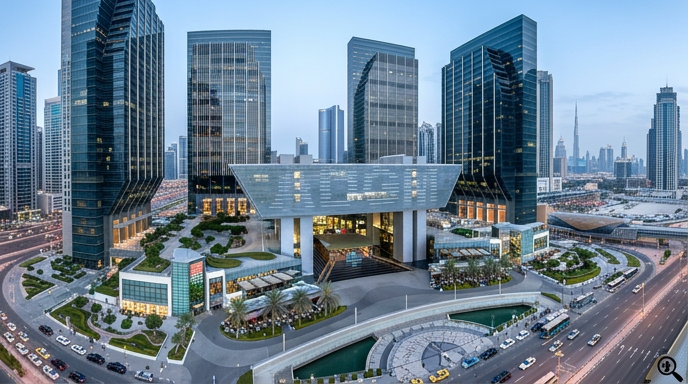
- The platform: EQT’s new office sits in Abu Dhabi Global Market, the emirate’s financial free zone, and carries 10 staff split between deal origination and investor relations. The firm has not said whether it plans to expand that headcount or open additional offices elsewhere in the Gulf.
- The thesis: EQT Partner Jimmy Mahtani told Semafor the firm sees opportunity in the succession wave moving through Gulf family businesses, as ownership passes to a new generation. He said that shift, alongside government privatization drives, is generating a pipeline of investment targets across the region.
- Target sectors: Education, healthcare and infrastructure are the three areas EQT named for its regional deployment. The firm did not disclose how much capital it intends to commit to the Middle East platform, nor a timeline for its first deals in the region.
- Portfolio expansion: Two existing EQT holdings are positioned to grow locally: EdgeConneX, a major US data center developer, and Nord Anglia, a schools group that already operates in the region. Both see potential for expansion in the Middle East.
- BlackRock’s shift: The world’s largest asset manager will divert up to $100 billion of its international capital deployment to the Middle East, Zawya reported, another marker of how quickly global fund managers are reweighting toward the Gulf.
- The spending wave: Around $2.1 trillion in spending is expected across the region by 2030, according to BlackRock, concentrated in infrastructure and energy as governments work to shore up their economies following the Iran war.
- The timing: The office opened while geopolitical tensions in the region remain unresolved, making the decision a test of Abu Dhabi’s argument that regional conflict has not disrupted commercial activity inside the emirate.
- The competition: Abu Dhabi is competing with other Gulf financial centers for the same global managers. Landing a European private equity house of EQT’s size strengthens ADGM’s case as the regional base of choice for firms building out Middle East operations.
Background:
EQT is one of Europe’s largest private equity groups, listed in Stockholm and managing roughly $390 billion. Gulf states have spent years courting international fund managers with free zones such as ADGM, which offer separate regulatory and legal frameworks designed to match global financial norms.
Between the lines:
The pitch EQT is making rests less on oil than on ownership change. A generational handover in family-held companies, combined with state privatization programs, is what converts a fast-growing region into a market with actual assets to buy. The presence of EdgeConneX signals the same data center demand driving capital into the Gulf elsewhere, while BlackRock’s $2.1 trillion projection frames the infrastructure build as the region’s central investment story.
What’s next
Watch for EQT’s first announced transaction from the Abu Dhabi platform, any disclosed fund size for the Middle East strategy, and whether EdgeConneX or Nord Anglia confirms specific regional projects.