Gulf oil exports rebound to 17 million barrels despite Hormuz crisis
· Originally published by ontime+ · Last verified: 1 Oct 2026 (SAFAA SUBHI)
The latest:
Gulf Arab producers shipped roughly 17 million barrels per day of crude and refined products in September, through the Strait of Hormuz or alternative pipelines, Kpler estimates — down from about 21 million before the war but a sharp recovery from the crisis lows. Iranian exports, by contrast, fell to around 200,000 barrels a day. Prices have not followed the volumes down.
Details:
- The volumes: Kpler’s September estimate of about 17 million barrels per day covers crude and products moving through Hormuz or via bypass pipelines. The pre-war baseline was roughly 21 million, leaving Gulf supply some 4 million barrels a day below pre-conflict levels.
- Iran’s collapse: Iranian exports have dropped to roughly 200,000 barrels per day, less than a tenth of pre-conflict levels, according to The Economist. The magazine argues that figure may leave Washington with the impression that Tehran’s ability to choke off Gulf shipments is weakening.
- Trump’s refusal: On 26 September, President Donald Trump rejected an Iranian ceasefire proposal that would have reopened the Strait of Hormuz for seven days. He said Tehran wanted the deal because it was “losing badly.”
- Prices say otherwise: Brent remains above $100 a barrel, up 43% from June, even as volumes recover. The Economist argues the strength reflects three drivers: a global supply shortfall, the possibility Washington restricts diesel exports, and fear Iran resumes attacks on shipping or energy infrastructure.
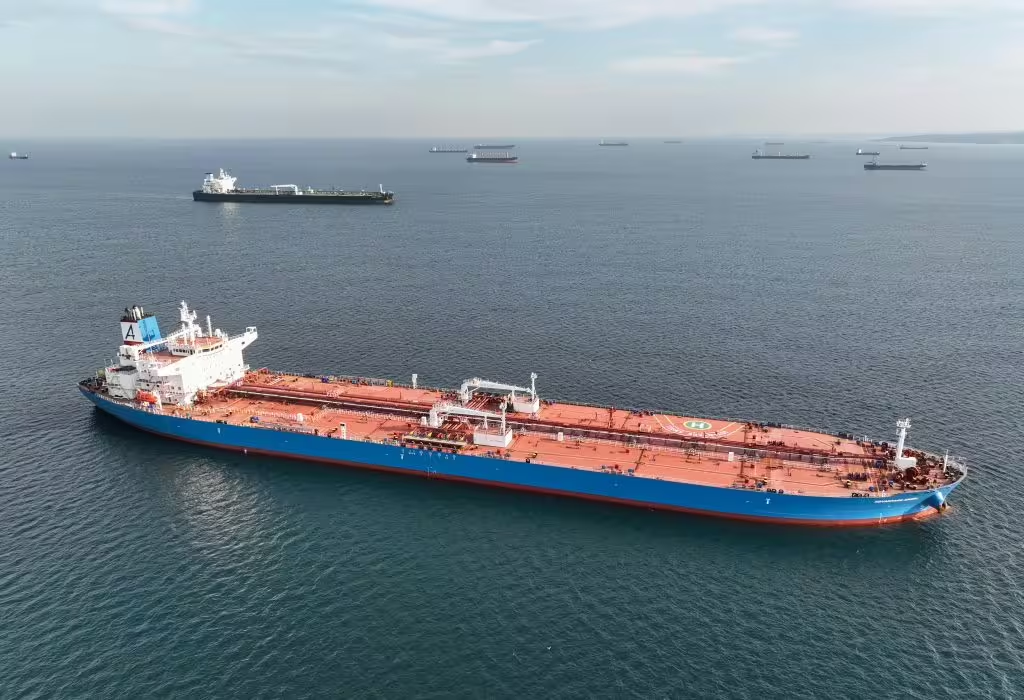
- The Saudi workaround: Riyadh has increased volumes crossing the strait, with state-owned tankers moving under American protection before transferring cargoes to other vessels in the Gulf of Oman. The UAE uses similar arrangements, according to The Economist.
- The cost: Saudi officials acknowledge that ship-to-ship transfers are complex and expensive, the magazine reports, making the arrangement a workaround rather than a durable fix while Gulf supply stays roughly 4 million barrels a day short.
- Chinese demand: After cutting crude purchases by about 40% over the summer, China has resumed buying as fuel inventories fell and refinery activity picked up. With Iranian barrels unavailable, Beijing must replace them on the open market, intensifying competition with other buyers.
- Benchmark spread: Dubai crude contracts reached around $116 a barrel while Dated Brent hit roughly $124, reflecting the scramble for available cargoes.
- Diesel squeeze: Limited Gulf supply and the ban on Russian exports pushed wholesale diesel prices to about $200 in major markets. The prospect of US restrictions on diesel exports has added further distortions between American crude prices and Brent.
- Iran’s leverage: Tehran has not disabled a tanker since 23 September, but The Economist cites unconfirmed reports of possible new mines and sightings of dozens of fast boats. Oil fields, ports and the Saudi east–west pipeline remain potential targets, and it assesses Houthis could pressure Bab al-Mandab.
Between the lines:
The export rebound measures adaptation, not Iranian weakness. Saudi and Emirati state tankers, American naval protection and ship-to-ship transfers in the Gulf of Oman restored volumes while leaving the underlying threat intact. That is why a 17 million barrel September coexists with Brent above $100: traders are pricing the mines, the fast boats and the pipeline targets, not the shipping bill.
What’s next
Watch whether Washington imposes diesel export restrictions, whether Iran resumes tanker attacks after the 23 September pause, and whether Chinese refinery buying keeps widening the Dubai–Brent spread.