UAE plans up to $54 billion energy investment by 2030
Energy Minister Suhail Al Mazrouei said the UAE will invest 150-200 billion dirhams in power by 2030.
· Last verified: 2 Nov 2026 (WAM)
Summary
- Energy Minister Suhail Al Mazrouei said the UAE will invest 150-200 billion dirhams in power by 2030.
- Clean energy reached 32.4% of national electricity generation in 2025, against a 35% target set for 2031.
- The spending targets generation, grids and storage as industry and data-centre demand climbs.
The latest
The UAE intends to commit between 150 and 200 billion dirhams to its energy sector by 2030, Energy and Infrastructure Minister Suhail bin Mohammed Al Mazrouei said at ADIPEC 2026, according to the state news agency WAM. He said the money will fund electricity generation projects, grid development and storage systems built to meet rising demand.
Details
- The headline figure: Al Mazrouei put the planned investment at 150 to 200 billion dirhams, equivalent to roughly 41 to 54 billion dollars, to be deployed by 2030. He framed it as a response to growing demand rather than a replacement programme for existing capacity, and did not break the range down by project or by year.
- Where it goes: The minister identified three spending tracks: new electricity generation projects, development of transmission and distribution networks, and energy storage systems. Storage and grid work sit alongside generation in the plan, reflecting the integration problem created by a rising share of intermittent renewable output.
- The clean-energy share: Clean energy accounted for 32.4% of total electricity generation in the UAE during 2025, Al Mazrouei said. That leaves the country 2.6 percentage points short of its national target of 35% by 2031, a gap he described as progress toward the goal rather than a shortfall.
- The demand driver: Industrial expansion, artificial intelligence workloads and data centres are the loads pushing national electricity requirements higher through the end of the decade. Data-centre power consumption is among the fastest-growing categories in Gulf electricity planning, and is a central reason utilities across the region are revising capacity forecasts upward.
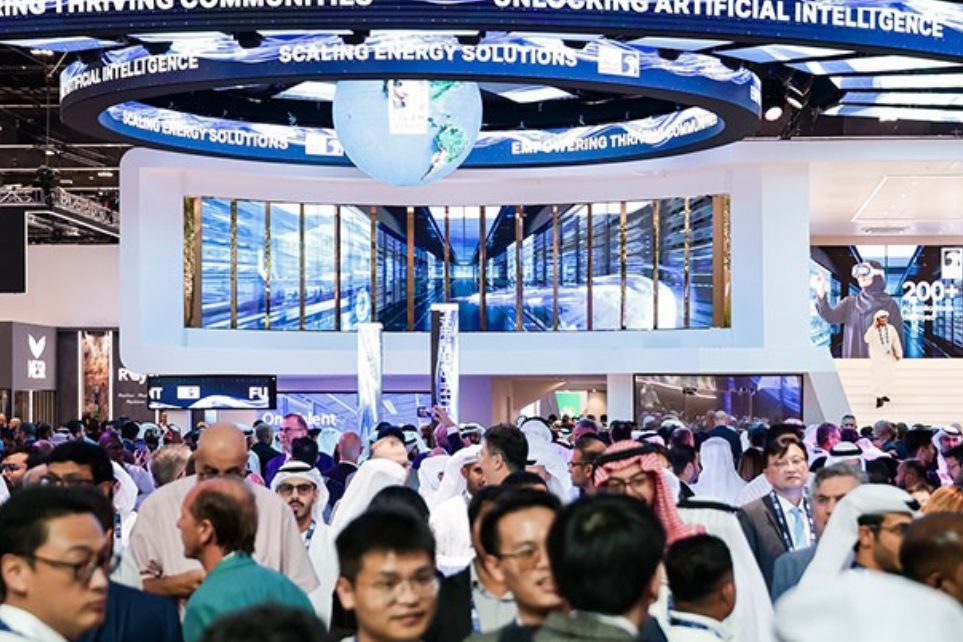
- The venue: The announcement came at ADIPEC 2026 in Abu Dhabi, the annual energy conference where Gulf producers and international operators set out investment plans. Ministerial figures disclosed at the event typically precede detailed project tenders rather than accompany them.
- What was not specified: Al Mazrouei did not name the companies or utilities that will carry out the projects, set out a year-by-year disbursement schedule, or identify how much of the total will come from public budgets versus private and foreign capital. No individual project within the programme was named.
- The 2031 benchmark: The 35% clean-energy target for 2031 functions as the measurable test of the investment plan. Reaching it requires the clean share to rise by the remaining margin within six years, while total generation itself is expanding to serve new industrial and computing load.
Background
The UAE generates electricity from a mix of gas, nuclear and solar. Its Barakah nuclear plant and large-scale solar projects underpin the clean-energy share, which the government tracks against staged national targets running to 2031 and beyond.
Between the lines
The plan's two stated pressures pull in the same direction but at different speeds. Demand from data centres and industry is arriving now, while the 35% clean share is dated 2031 — which is why storage and grid spending appear alongside generation in the minister's list. Adding intermittent capacity without network and storage capacity would not close the demand gap on the timeline the figures imply.
What's next
Watch for project tenders and utility procurement rounds that convert the 150-200 billion dirham range into named contracts, and for the 2026 clean-energy share against the 32.4% recorded in 2025.
Source: WAM