Abu Dhabi spends billions on ports to bypass Iran's Hormuz chokepoint
Abu Dhabi's $300 billion fund is buying AD Ports and funding infrastructure outside Hormuz, Bloomberg reported.
· Source: Bloomberg · Last verified: 30 Sept 2026
Summary
- Abu Dhabi's $300 billion fund is buying AD Ports and funding infrastructure outside Hormuz, Bloomberg reported.
- Gulf oil exports have been disrupted for months by the Iran war, with Fujairah hit by drones and missiles.
- The spending turns the UAE's Zero Hormuz policy into concrete assets, reducing Iran's leverage over its exports.
The latest
A $300 billion Abu Dhabi sovereign wealth fund is moving to take Abu Dhabi Ports Co. private at a valuation of nearly $9 billion, Bloomberg reported, as part of a push to route trade and energy around the Strait of Hormuz. The fund, L'imad Holding, passed to Crown Prince Sheikh Khaled bin Mohamed Al Nahyan shortly before the Iran war began.
Details
- The vehicle: L'imad Holding is the enlarged entity created after the wealth fund ADQ was folded into it, with roughly $300 billion under management, according to Bloomberg. Sheikh Khaled took control of it shortly before the Iran war started, giving the crown prince direct command of one of the emirate's largest investment platforms.
- The ports deal: The fund announced plans to take Abu Dhabi Ports Co. private at a valuation of close to $9 billion. People familiar with the matter told Bloomberg the fund is likely to spend tens of billions of dollars more on new port infrastructure located outside the Strait of Hormuz.
- The partnership: In May the wealth fund agreed with BlackRock, Singapore's Temasek Holdings and Abu Dhabi National Oil Co. to jointly target up to $30 billion in infrastructure investments covering energy transportation, logistics and water, Bloomberg reported.
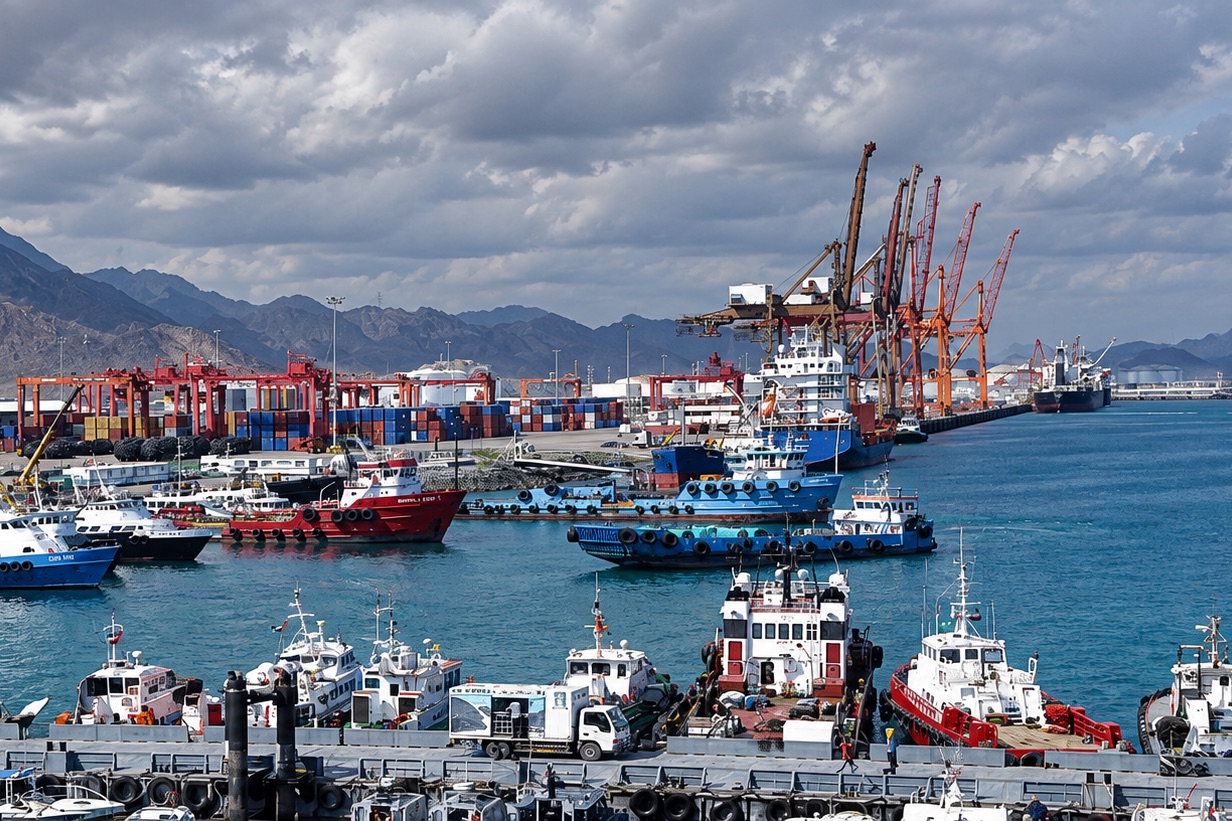
- The pipeline: Adnoc, where Sheikh Khaled chairs the executive committee, is building a second oil pipeline designed to double export capacity through Fujairah, the port that sits on the Gulf of Oman side of the chokepoint. Dubai's DP World is separately expanding container terminals at the same location.
- The scale: Abu Dhabi commands about $2 trillion in total sovereign wealth across its funds. Sheikh Tahnoon, the crown prince's uncle, still oversees funds worth more than $1 trillion, while Sheikh Mansour chairs the $385 billion Mubadala and the UAE central bank.
- The policy: UAE Minister of Foreign Trade Thani Al Zeyoudi said in June the country wants zero dependency on Hormuz regardless of whether the strait is open, framing the bypass build-out as permanent rather than a wartime measure.
- The dispute: US Treasury Secretary Scott Bessent predicted Hormuz would become "a worthless piece of water" within two years as pipeline bypasses multiply. Qatar's energy minister called that assessment completely wrong, a rare public split between Washington and a Gulf producer over the strait's future.
- The backdrop: Gulf oil exports have been disrupted for months by the Iran war. Fujairah itself has come under drone and missile attack, and the UAE cut economic ties with Iran in August after accusing Tehran of firing ballistic missiles at Emirati territory.
Background
Roughly a fifth of global oil trade normally moves through the Strait of Hormuz, a narrow waterway Iran borders along its entire northern shore. Fujairah lies outside it, which is why pipelines and terminals there carry strategic weight for Gulf exporters.
Between the lines
The bypass is not only infrastructure. Concentrating the ports deal, the Adnoc pipeline and the BlackRock-Temasek partnership under one crown prince consolidates economic decision-making alongside Sheikh Tahnoon's and Sheikh Mansour's portfolios. The dispute between Bessent and Qatar's energy minister shows the payoff is contested: bypass capacity reduces Iran's leverage only if the volumes actually shift, and Fujairah has already proven it is within missile range.
What's next
Watch the AD Ports privatization approval and pricing, the completion timeline for Adnoc's second Fujairah pipeline, and whether the $30 billion BlackRock, Temasek and Adnoc partnership names its first projects.
Source: Bloomberg