Saudi stocks drop 1% after deadly Riyadh airport attack
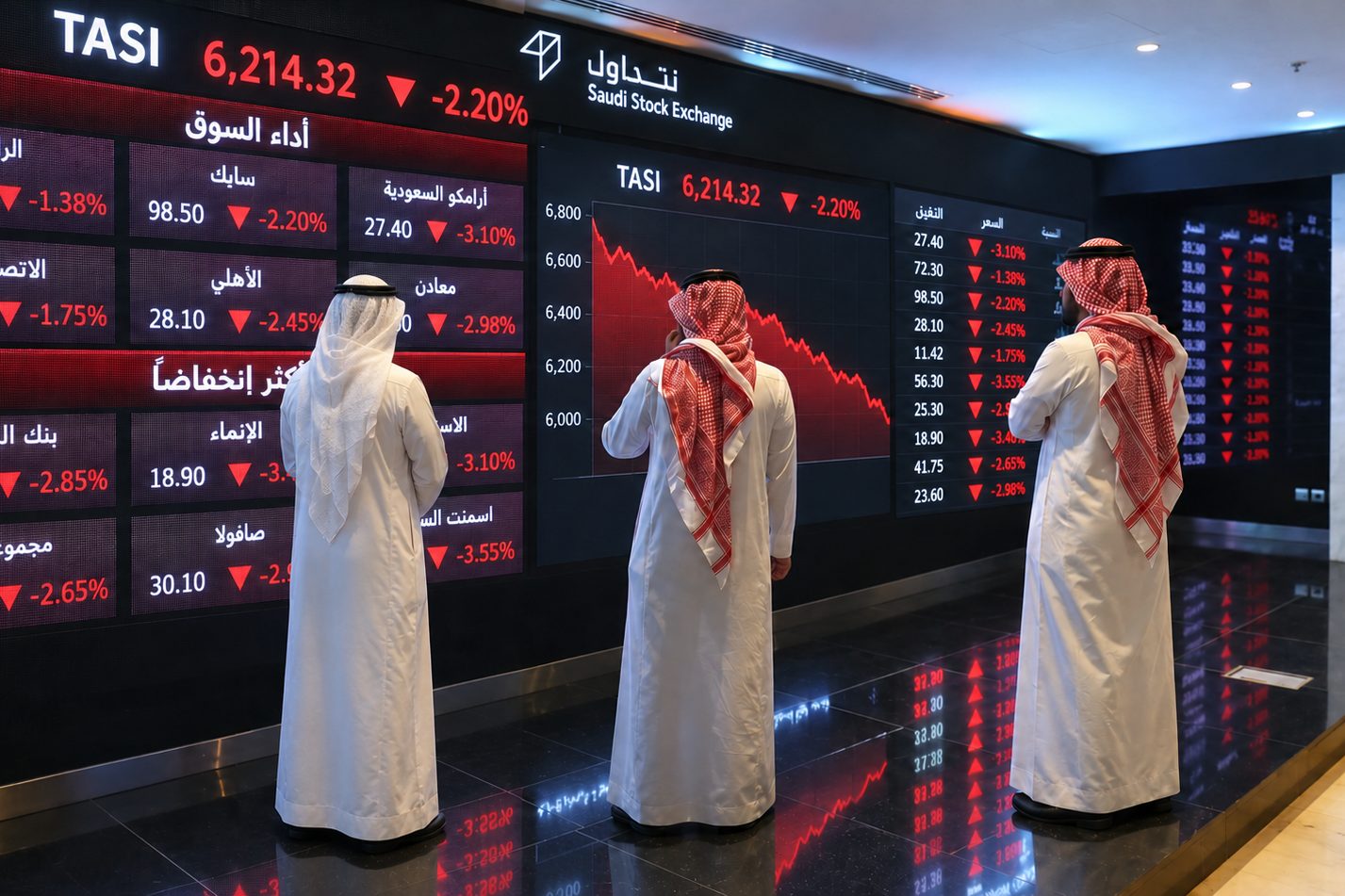
Saudi Arabia's benchmark index fell 1% Sunday, a day after the Riyadh airport attack
· Source: Reuters · Last verified: 11 Oct 2026
Summary
- Saudi Arabia's benchmark index fell 1% Sunday, a day after the Riyadh airport attack
- The attack killed at least 12 people and wounded more than 300, Reuters reported
- Trump said Washington was weighing joining Saudi strikes against the Iran-backed Houthis
The latest
Saudi Arabia's benchmark index closed down 1% on Sunday, with most constituents in negative territory, a day after an attack on Riyadh's international airport killed at least 12 people and wounded more than 300, according to Reuters. It was the deadliest attack in the kingdom in more than a decade. Organisers of two major energy and investment conferences said their events would proceed this month.
Details
- The market move: The Tadawul All Share Index dropped 1% on Sunday, Reuters reported, with the bulk of listed names trading lower. The decline came in the first session after the airport attack, making it the market's first chance to price in the strike on the capital's main aviation hub.
- The heavyweights: Saudi National Bank, the kingdom's largest lender, fell 1%, in line with the broader index, according to Reuters. Oil major Saudi Aramco, the most heavily weighted stock on the exchange, slipped 0.6% — a smaller decline than the benchmark itself.
- The casualties: At least 12 people were killed and more than 300 wounded in Saturday's attack on Riyadh's international airport, Reuters reported. It ranks as the deadliest single incident in Saudi Arabia in over a decade. No party claiming responsibility was named.
- Business as usual: Despite missile attacks on the Riyadh airport this week, organisers of two major Saudi energy and investment conferences said the events would go ahead this month, according to Reuters. The organisers did not name the conferences or disclose whether security arrangements had been altered.
- The American position: US President Donald Trump said Washington was considering joining Saudi strikes against the Iran-backed Houthis, Reuters reported. He did not set a timeline or specify what form US participation would take. Such a move would widen a conflict that spilled over from the US-Israeli war with Iran.
- The air campaign: Riyadh and the Yemeni government have claimed hundreds of strikes against targets in Houthi-held territory, according to Reuters. Neither side has published a full accounting of the targets hit or the timeframe covered by that total.
- The Houthi claim: The Houthis said those strikes killed civilians, including women and children, Reuters reported. Reuters said it could not independently verify the claim. No casualty figure was attached to the Houthi account.
- The wider war: The escalation stems from the US-Israeli war with Iran, which has spread beyond its original theatre, according to Reuters. The Houthis are described as Iran-backed, placing the Riyadh attack within that broader confrontation rather than a self-contained Saudi-Yemeni dispute.
Between the lines
The 1% index drop is modest for a market absorbing the deadliest attack in the kingdom in over a decade, and Aramco's 0.6% slip undercut the benchmark. The conference organisers' decision to proceed points the same way: the attack is being treated as a security shock rather than an event that reprices Saudi assets. Trump's stated consideration of joining the strikes is the variable that could change that.
What's next
Watch whether Washington moves from considering to joining Saudi strikes on the Houthis, how the index trades in sessions ahead, and whether the two energy and investment conferences open on schedule this month.
Source: Reuters