Aramco empties Dhahran headquarters as Houthi strikes hit Saudi oil hub
Aramco ordered staff out of its Dhahran headquarters and told them to work remotely, sources said.
· Source: Reuters · Last verified: 23 Oct 2026
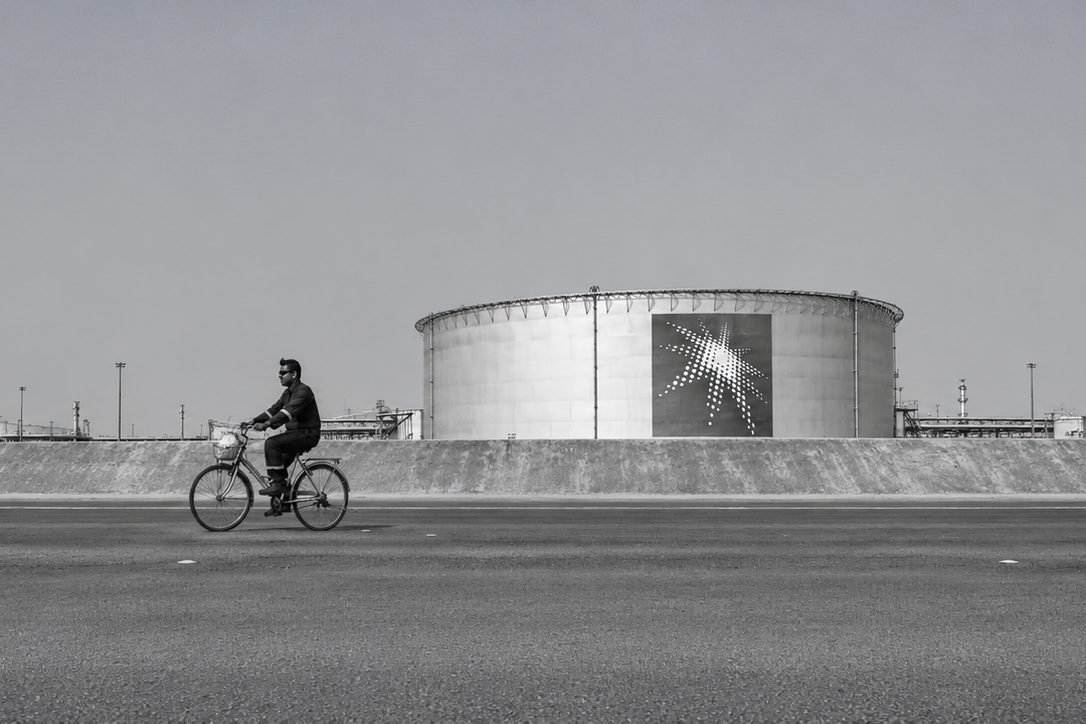
Summary
- Aramco ordered staff out of its Dhahran headquarters and told them to work remotely, sources said.
- The order follows a Houthi strike this month that set several floors of the building ablaze.
- It is the company's first evacuation since the war with Iran began, pushing risk onto personnel.
The latest
Employees have been ordered out of Saudi Aramco's Dhahran headquarters on the Gulf and told to work remotely, six people familiar with the matter told Reuters, in what would be the company's first evacuation since the start of the war with Iran. The reason for the order was not clear. Aramco did not immediately respond to a request for comment.
Details
- The trigger: The order follows a wave of Houthi attacks on Aramco facilities and Saudi airports, according to Reuters. Earlier this month a Houthi strike caused heavy damage to the Dhahran headquarters itself, with fire spreading across several floors.
- Market reaction: The TASI, Saudi Arabia's main index, fell 2.5% on Thursday after the Aramco news, according to LSEG data. Brent futures rose $3.06, or 2.81%, to $111.88 a barrel by 11:04 GMT, after touching $112.55 earlier, the highest since 18 May.
- Nearby casualties: A Houthi attack on King Fahd International Airport in Dammam, near Dhahran, killed two people on Wednesday evening, a Saudi national and an Indian national, and wounded eight. Saudi Arabia's civil aviation authority said Thursday that air traffic was normal.
- Houthi claims: Houthi military spokesman Yahya Saree claimed the group struck Aramco facilities in Yanbu and the defence ministry in Riyadh. Saudi authorities did not confirm it. The coalition said it intercepted drones over Riyadh and Medina, and Riyadh hit missile launch sites while pledging to defend its territory.
- The wider front: Fighting intensified after the Houthis advanced toward Bab al-Mandab at the entrance to the Red Sea, collapsing the UN-brokered 2022 truce that had largely halted cross-border attacks. Saree claimed Saudi strikes on Yemen have killed or wounded 562 people since mid-July, when the Houthis imposed a naval blockade.
- Production damage: Saudi output fell below 7 million barrels per day for most of the war's first six months, down from more than 10 million bpd before the conflict, according to the International Energy Agency. It recovered to about 8 million bpd in September.
- Export chokepoints: Aramco is studying additional crude export routes after the war exposed the vulnerability of Hormuz, Bab al-Mandab and Suez. The East-West pipeline, used to bypass Hormuz, carries about 7 million bpd and is being expanded toward 10 million; Riyadh said in September that drones launched from Iraq targeted it.
- Company resilience: Chief executive Amin Nasser told Al Arabiya Business that Aramco is seeking partnerships abroad to expand strategic storage, and that capital spending guidance for 2026 is unchanged at $50-55 billion. The company uses drones to survey damage and sources about 90% of repair materials domestically.
- Supply math: Nasser said roughly 3 billion barrels of supply have been lost during the crisis and more than 1 billion barrels drawn from inventories, with refilling stocks potentially taking up to two years. He expects demand to rise by about 3 million bpd once the war ends.
Background
The Houthis warned airlines this month against using Saudi airspace, after repeatedly targeting Saudi airports including Riyadh International and Abha in the south. The group has also seized territory near Bab al-Mandab since advancing in September.
Between the lines
Evacuating Dhahran moves the risk from infrastructure to personnel. The headquarters has already burned once this month, and the Dammam airport attack killed two people nearby, placing the administrative center of the world's largest crude exporter inside the strike envelope rather than only its pipelines and terminals. The 2.5% TASI drop suggests markets read the order as a signal about threat level, not a routine precaution.
What's next
Watch whether Aramco confirms the evacuation or names a return date, whether Saudi authorities verify the claimed Yanbu strike, and whether output holds near 8 million bpd after September's recovery.
Source: Reuters, LSEG, International Energy Agency, Al Arabiya Business