Riyadh Delivery Robot Pilot Targets 85% Cost Reduction
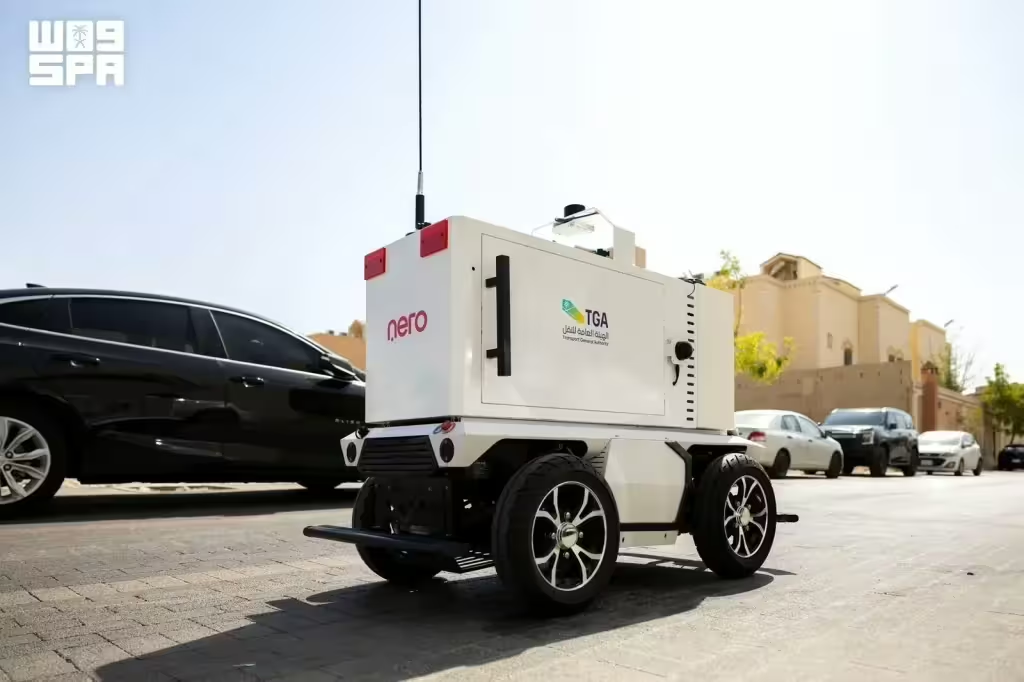
The latest Saudi Arabia has begun testing autonomous electric delivery vehicles in a designated area of Al-Falah, where customers order electronically before goods are loaded for driverless transport to their destinations.
· Originally published by ontime+ · Last verified: 6 Oct 2026 (Caroline Haiat)
Key Points
- Saudi Arabia has launched its first autonomous delivery pilot in Riyadh’s Al-Falah district.
- Level 4 electric vehicles use 360-degree sensors and remain under continuous remote oversight.
- The trial tests cheaper, quieter last-mile logistics while advancing Vision 2030 automation goals.
The latest
Saudi Arabia has begun testing autonomous electric delivery vehicles in a designated area of Al-Falah, where customers order electronically before goods are loaded for driverless transport to their destinations. The General Transport Authority launched the Riyadh pilot as the Kingdom expands artificial intelligence, electric mobility and automation across transport and logistics. Authorities say the technology could lower delivery costs by up to 85%, eliminate operational carbon emissions and reduce traffic noise.
Details
- Defined operation: The vehicles use Level 4 autonomous-driving technology, allowing them to perform the driving task without continuous human control inside defined geographic and operational limits. The trial is restricted to part of Al-Falah, rather than the entire capital, and does not involve systems designed to operate everywhere under all conditions. These boundaries allow the technology to be tested within a controlled operating environment.
- Safety systems: Each vehicle carries sensors providing 360-degree coverage of its surroundings and can stop immediately in an emergency. A remote operations centre monitors movements in real time and maintains continuous oversight throughout delivery operations, adding human supervision without requiring continuous control inside each vehicle.
- Strategic role: The project forms part of Vision 2030 efforts to transform logistics and position Saudi Arabia as a global trade and transportation hub linking Asia, Europe and Africa. Wider investment includes ports, airports, roads, warehouses and digital infrastructure, alongside increased use of artificial intelligence and automation across logistics operations.
- Last-mile economics: Last-mile delivery is one of logistics’ most costly and complex stages, requiring companies to manage vehicles, drivers, congestion, fuel, timing and rising customer expectations. Autonomous systems could reduce some expenses through limited human intervention and optimized routing. The projected reduction of up to 85% is the cost target associated with the pilot.
- Controlled testbed: Riyadh’s smart-city transformation includes public transport, digital infrastructure and new mobility systems. Delivery vehicles offer a relatively controlled route into autonomous technology because operations can follow predictable journeys and remain within specific districts. Such deployments provide an intermediate step before more complex autonomous systems involving passengers.
- Scale and tests: The authority has not announced the fleet size, expected number of deliveries or a timetable for expansion beyond Al-Falah. Broader deployment would test navigation around pedestrians and conventional traffic, cybersecurity, maintenance and regulatory oversight. Riyadh’s extreme temperatures also create demanding operating conditions for batteries, sensors and electronic systems.
Background
The electric fleet produces no direct carbon emissions while operating and is expected to be quieter than conventional delivery vehicles. Its introduction accompanies Saudi investment in renewable energy, electric mobility and technologies intended to reduce emissions from transportation and industry.
What’s next
Operating reliability, delivery volumes, performance in extreme heat and measured cost savings in Al-Falah will be the key indicators. A decision to expand beyond the district would be the next concrete step toward a commercial delivery network.