Saudi Arabia postpones flagship investor summit to 2027 after airport strikes
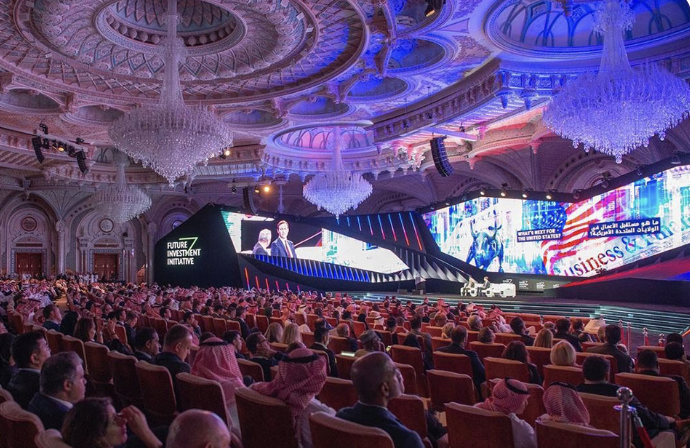
Saudi Arabia has postponed the Future Investment Initiative, the Riyadh conference known as Davos in the Desert, that was set to open Oct. 26, after Iran-backed Houthi missile and drone attacks on the kingdom’s airports and capital.
· Originally published by ontime+ · Last verified: 19 Oct 2026 (Nicole Jeffrey)
Key Points
- Riyadh shelved the Future Investment Initiative, due Oct. 26, pushing its tenth edition into next year.
- Houthi forces hit Riyadh's international airport at least four times in two weeks, killing 18 people.
- The delay signals that war costs are now colliding with the crown prince's foreign-investment drive.
The latest:
Saudi Arabia has postponed the Future Investment Initiative, the Riyadh conference known as Davos in the Desert, that was set to open Oct. 26, after Iran-backed Houthi missile and drone attacks on the kingdom’s airports and capital. Organizers first decided Monday to drop the in-person format, then told attendees the event would move to next year. They said new dates would be released soon.
Details:
- The organizers’ framing: In an email to attendees, FII organizers said the postponement was taken to ensure the tenth edition delivers “the full scale, quality, and impact” expected by partners, members, speakers and delegates. The message did not cite the attacks directly, and no replacement dates were given.
- The attacks: The Houthis have struck Riyadh’s international airport at least four times in the past two weeks, according to the kingdom. One strike killed at least 13 people and injured more than 300. Five more were killed and dozens injured in the other strikes, Saudi officials told reporters last week.
- The weapons count: Saudi Arabia said the airport was hit by 20 projectiles: 10 drones, four ballistic missiles, four cruise missiles and two unidentified. The Wall Street Journal reported the kingdom has been shifting air-defense batteries around the country to shield palaces and energy infrastructure.
- Wall Street hesitation: Executives weighed security risks against the danger of offending their hosts. Bankers at JPMorgan Chase and Citigroup were canceling meetings, while staff around Jamie Dimon and Jane Fraser deliberated over whether the two chief executives should attend. Attendees consulted security teams about threats to hotels and landmarks.
- Other events hit: The conference joins gatherings modified, canceled or postponed during the wave of airport attacks: an EU-Gulf leaders’ summit, Riyadh Fashion Week, the Six Kings Slam tennis tournament and the PIF Saudi International golf event. Civil-defense authorities broadcast a threat warning for Riyadh, then sounded the all-clear.
- The economic numbers: Saudi Arabia’s Finance Ministry expects the economy to contract 3.6% this year. Net foreign direct investment inflows fell year-on-year in both the first and second quarters, while rising defense and infrastructure costs threaten to pull money away from megaprojects meant to cut dependence on oil.
- The war’s origins: The Houthis escalated at the end of the summer, seizing strategic territory along the Red Sea’s Bab al-Mandeb chokepoint and threatening Saudi oil exports. They have targeted refineries and airports, saying aviation would be treated as part of the battlefield. A 2022 ceasefire collapsed this summer.
- What was working: Before the U.S. and Israel’s war with Iran and the Houthi escalation, Saudi travel and tourism were growing above target and faster than the global average. The non-oil economy had passed half the total, millions of women had entered the workforce, and entertainment spending was up.
- Project strain: Several transformation projects were already stalled or under review, including tourism developments meant to showcase modernization. The kingdom abandoned plans to host the 2029 Asian Winter Games in January, and still faces spending commitments for the 2030 World Expo and the 2034 soccer World Cup.
Background:
Saudi Arabia intervened in Yemen’s civil war in 2015 and fought the Houthis for years before a 2022 ceasefire. The FII became the centerpiece of Vision 2030, recovering its Wall Street attendance after many financiers boycotted the 2018 edition over the murder of journalist Jamal Khashoggi.
Between the lines:
The postponement puts two Saudi priorities in direct conflict. The FII exists to sell the kingdom as a safe destination for global capital, but the airport delegates would land at has been hit 20 times and the state broadcast a threat warning over Riyadh. With the Finance Ministry forecasting a 3.6% contraction and FDI already falling, the event’s absence removes a key annual venue for raising money.
What’s next
Organizers said new dates would be announced soon. Watch whether the kingdom restores security for civilian air traffic at Riyadh airport, the third-quarter FDI reading, and whether the EU-Gulf summit and other shelved events are rescheduled.