Saudi East-West oil pipeline struck in Medina, fire contained
· Originally published by ontime+ · Last verified: 10 Nov 2026 (SAFAA SUBHI)
The latest:
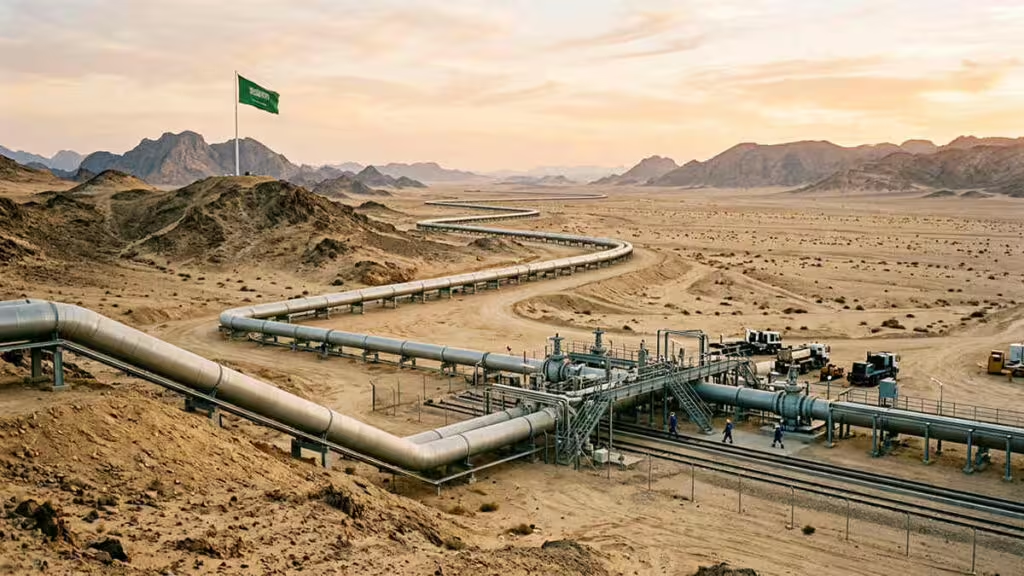
A strike hit Saudi Arabia’s East-West oil pipeline in the Medina region on Monday, igniting a fire that emergency crews later put out. An Energy Ministry source cited by Saudi state media said no deaths or injuries were recorded and pipeline operations were unaffected. The reports did not identify who carried out the attack.
Details:
- The statement: Saudi Press Agency, citing an Energy Ministry source, said the blaze was limited and brought under control, and that the line kept running. The ministry did not name a party responsible, nor specify the weapon used or the precise location along the route.
- The pipeline: Operated by Saudi Aramco, the East-West line runs 1,200 kilometers (745 miles) across the Arabian Peninsula, moving crude from the Eastern Province to Yanbu on the Red Sea coast. Its nameplate capacity is 7 million barrels per day, a level Aramco said was reached in the first quarter of 2026.
- Why it matters: Since the conflict disrupted flows through the Strait of Hormuz, Riyadh has rerouted about 4 million barrels per day through the line to Yanbu, equivalent to roughly 4% of global supply. Before the war, around a quarter of the world’s seaborne oil trade passed through Hormuz.
- The day before: An Aramco administrative building in Riyadh was damaged Sunday in an attempted attack, with falling fragments causing limited damage and no casualties, the Saudi Energy Ministry said in a post on X.
- Houthi claim: Yemen’s Iran-aligned Houthi movement, formally Ansar Allah, said it carried out four military operations against Saudi Arabia, naming targets including the King Abdullah Financial District in Riyadh, the capital’s airport, Aramco oil storage facilities and Abqaiq in the Eastern Province.
- The escalation: The current round began in mid-July when the internationally recognized Yemeni government disabled a runway at Houthi-held Sanaa airport to block an Iranian aircraft from landing. The Houthis then struck Abha airport and declared a blockade on Saudi shipping in the Red Sea, a charge Riyadh rejected.
- Coastal gains: In September the group seized the districts of Hays and Al-Khokha in Hodeidah, then advanced toward Mokha, Perim island and the Hanish islands, extending control over Yemen’s Red Sea coastline and shipping lanes used for Saudi oil exports.
- Earlier closure: Drone attacks in September forced an 11-day precautionary shutdown of the pipeline before a partial restart. Saudi state media said at the time that the strikes came from Iraqi territory, an account Baghdad confirmed.
Background:
The East-West line is Saudi Arabia’s main alternative export route, sparing the world’s largest exporter the full impact of the wartime Hormuz closure that paralyzed shipments from neighboring producers. It has been hit repeatedly as the global energy crunch deepened.
Between the lines:
Two consecutive incidents, the Riyadh Aramco building on Sunday and the Medina pipeline section on Monday, point to pressure applied at both ends of the export chain rather than a single site. With Hormuz constrained and roughly 4% of global supply moving through this one line, any sustained damage to the Yanbu route would remove the cushion that has kept Saudi exports flowing.
What’s next
Watch whether Aramco reports any throughput reduction at Yanbu, whether Riyadh publicly attributes the strike, and whether the Houthis announce further operations after claiming four against Saudi targets.