Saudi resistance to fossil fuel language sank COP31 deal, negotiators say
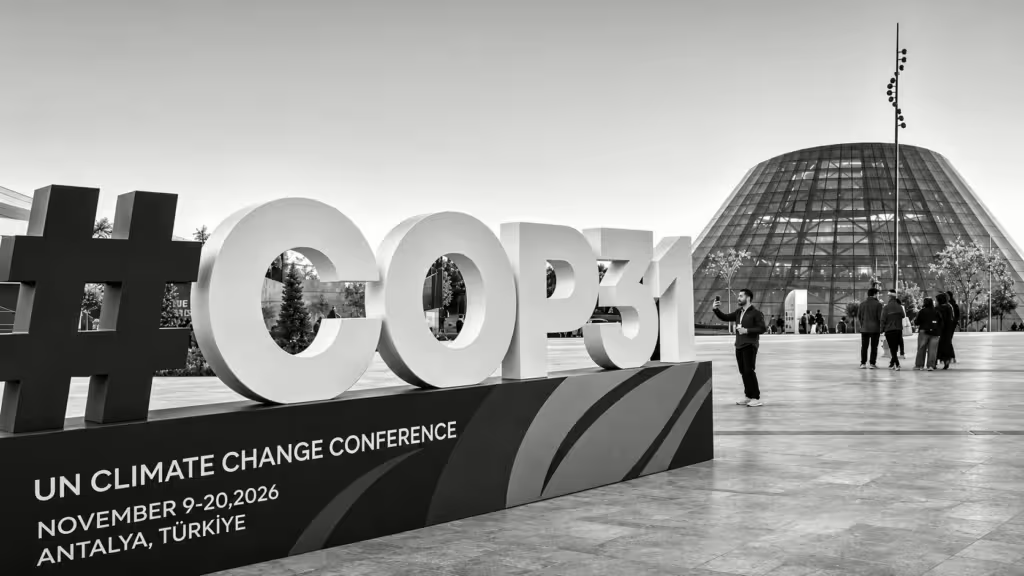
COP31 in Antalya closed Sunday with no political agreement, the first collapse of its kind since 2009, and negotiators from Europe, small island states, Latin America, Asia and Africa told Reuters that Saudi Arabia’s refusal to accept any reference to reducing reliance on fossil fuels was the main reason.
· Originally published by ontime+ · Source: Reuters · Last verified: 23 Nov 2026
Key Points
- Negotiators from five regions told Reuters Riyadh blocked any fossil fuel mention at COP31 in Antalya.
- Talks ended Sunday without a political agreement, the first such failure since 2009.
- A Saudi-shaped outcome weakens the Glasgow and Dubai precedents that named oil, gas and coal explicitly.
The latest:
COP31 in Antalya closed Sunday with no political agreement, the first collapse of its kind since 2009, and negotiators from Europe, small island states, Latin America, Asia and Africa told Reuters that Saudi Arabia’s refusal to accept any reference to reducing reliance on fossil fuels was the main reason. Those negotiators also said Saudi officials had regular access to the Turkish-Australian presidency while others waited.
Details:
- The Saudi position: Delegates and observers told Reuters Riyadh held a fixed line through the second week: the cover text must not mention fossil fuels, and should instead promote carbon capture technologies that cut emissions from oil, gas and coal. One Asian delegate said Riyadh framed those positions as non-negotiable and even existential.
- The access complaint: Negotiators from five regions told Reuters that Saudi officials enjoyed disproportionate influence through regular meetings with the presidency. A negotiator from a small island state said a promised meeting with the Turkish and Australian presidents was cancelled again as the conference went into record overtime.
- The presidency’s answer: The Turkish COP presidency said no group or country received preferential treatment. Representatives for Saudi Arabia and Australia did not immediately comment to Reuters. COP31 president Murat Kurum told the closing plenary Sunday afternoon that no agreement existed and that he would advance no new text.
- The counter-bloc: Germany convened small island states and other members of the High Ambition Coalition, which groups vulnerable nations, African states and developed countries including Singapore and Canada. They sent the presidency a letter backed by around 130 countries demanding any Antalya deal mention transitioning away from fossil fuels.
- The breaking point: The revised text that emerged early Sunday largely ignored that letter, keeping no fossil fuel reference and strong carbon capture language. Tuvalu climate minister Maina Talia said at the time it seemed countries were negotiating with the Saudis. Delegates began leaving Antalya to catch flights.
- EU hardening: The European Union also refused to move. Climate Commissioner Wopke Hoekstra said Saturday the outcome would be either a good deal or no deal. Ireland’s climate minister Darragh O’Brien, speaking for the EU, told Reuters: “This COP, I believe, was hijacked by some oil states.”
- The power vacuum: Several negotiators said Riyadh’s hand was strengthened by the absence of active US engagement at Antalya and the lack of close US-China coordination that brokered compromises at earlier COPs. Singapore Environment Minister Grace Fu said the boundaries of discussion became less clear without one or two major players defining them.
- Late-night traffic: As Saturday slipped into Sunday, Saudi, Chinese and Russian officials frequently visited the presidency’s offices while other groups struggled to secure meetings, delegates told Reuters. Danish Climate Minister Samira Nawa said the inability to name fossil fuels suggested oil countries carried a larger voice at this COP.
Background:
Saudi Arabia and fellow OPEC members have long resisted climate texts targeting fossil fuels, arguing they remain necessary in the global energy mix. Fossil fuels were named explicitly in the Glasgow 2021 and Dubai 2023 outcomes. Turkey opened COP31 pushing a global electrification pledge and implementation of past deals.
Between the lines:
Riyadh’s leverage rested on two conditions that may not hold next year: a cover text drafted without any fossil fuel reference, and no US-China pairing setting the outer limits of compromise. The 130-country letter shows the opposing bloc is numerically large but could not convert that weight into text, suggesting procedural access to the presidency mattered more than headcount.
What’s next
Watch whether the next COP presidency restores explicit fossil fuel language to a draft cover text, whether the High Ambition Coalition turns its 130-country letter into a formal bloc, and whether Saudi Arabia or Australia answers the access allegations.