US disables ship off Oman as Iran collects Hormuz transit fees
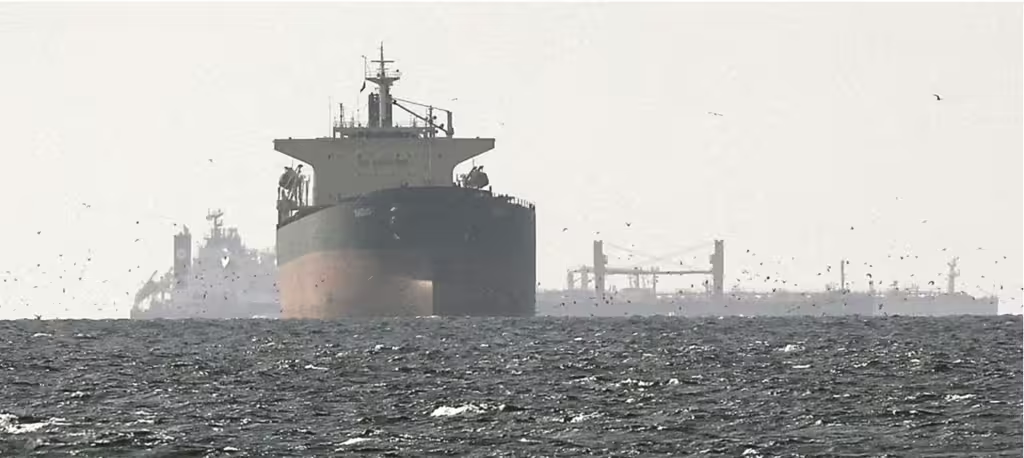
A US fighter aircraft knocked out the propulsion system of a commercial ship in the Gulf of Oman after it ignored warnings, Central Command said, in a strike that left the crew unharmed.
· Originally published by ontime+ · Source: Reuters · Last verified: 11 Oct 2026
Key Points
- US forces disabled a Panama-flagged vessel accused of running the blockade on Iran, CENTCOM said.
- The New York Times reported Chinese firms paid Iran fees to move ships through Hormuz.
- Widening maritime attacks are lifting shipping and insurance costs and squeezing Gulf oil exports.
The latest:
A US fighter aircraft knocked out the propulsion system of a commercial ship in the Gulf of Oman after it ignored warnings, Central Command said, in a strike that left the crew unharmed. Hours of escalation around the same waterway included an Islamic Revolutionary Guard Corps announcement that an oil tanker exploded in the Strait of Hormuz after striking a naval mine.
Details:
- The strike: CENTCOM said the targeted vessel was the Panama-registered Ocean Mulika, and that the aircraft disabled its propulsion only after the ship disregarded repeated warnings. The command said no crew member was injured. It did not say where the vessel was headed or what action would follow.
- Transit fees: The New York Times, citing intelligence information, reported that Chinese companies have been paying Iran fees in exchange for allowing their ships to pass through the Strait of Hormuz despite the US blockade. The report did not name the companies involved or quantify the revenue Tehran collects.
- Tanker explosion: The Revolutionary Guard said a tanker blew up after hitting a naval mine. It did not identify the vessel, and offered no independent evidence establishing the cause of the blast.
- UAE rescue: Emirati authorities said they rescued 22 sailors from a burning tanker, according to Reuters. Any link between that rescue and the Revolutionary Guard’s mine announcement has not been established.
- Freight costs: The Financial Times reported that the cost of chartering a very large crude carrier passed 1.2 million dollars a day in late September, as transport and insurance risk climbed across the region.
- Hormuz flows: Oil moving through Hormuz has averaged 9.9 million barrels a day, down 42% from pre-war levels, according to figures attributed to the Financial Times.
- The rebound: The Financial Times put flows at 11 million barrels a day in an October 8 report, following a temporary recovery to 15 million barrels a day in late September — a swing that underlines how quickly traffic reacts to each incident.
- Iran to China: Iranian crude exports to China fell to 590,000 barrels a day in September, according to data cited by Reuters, the lowest monthly level since January 2023.
Between the lines:
Taken together, the figures suggest the blockade has not sealed Hormuz but has narrowed Iran’s own trade, with exports to China at a two-year low. At the same time, mines and attacks give Tehran leverage over Gulf shipping costs even as its own barrels decline. The Ocean Mulika strike also shows Washington acting against ships it accuses of evading the blockade, not only those threatening navigation.
What’s next
Tanker transit data will show whether flows recover or slide further. Also unresolved: the identity of the tanker the Revolutionary Guard says exploded, the investigation into the fire’s cause, and Washington’s response to Iran’s transit fees.