Fujairah Ship-to-Ship Oil Transfers Hit 120 as Gulf Bypasses Hormuz
Fujairah recorded roughly 120 ship-to-ship oil transfers in September, up from a handful before the war.
· Last verified: 16 Oct 2026 (Semafor, International Monetary Fund)
Summary
- Fujairah recorded roughly 120 ship-to-ship oil transfers in September, up from a handful before the war.
- The UAE's Zero Hormuz push rests on a 2012 pipeline carrying about 1.8 million barrels daily.
- Saudi Arabia, Kuwait and Oman are weighing their own routes, reshaping how Gulf wealth reaches markets.
The latest
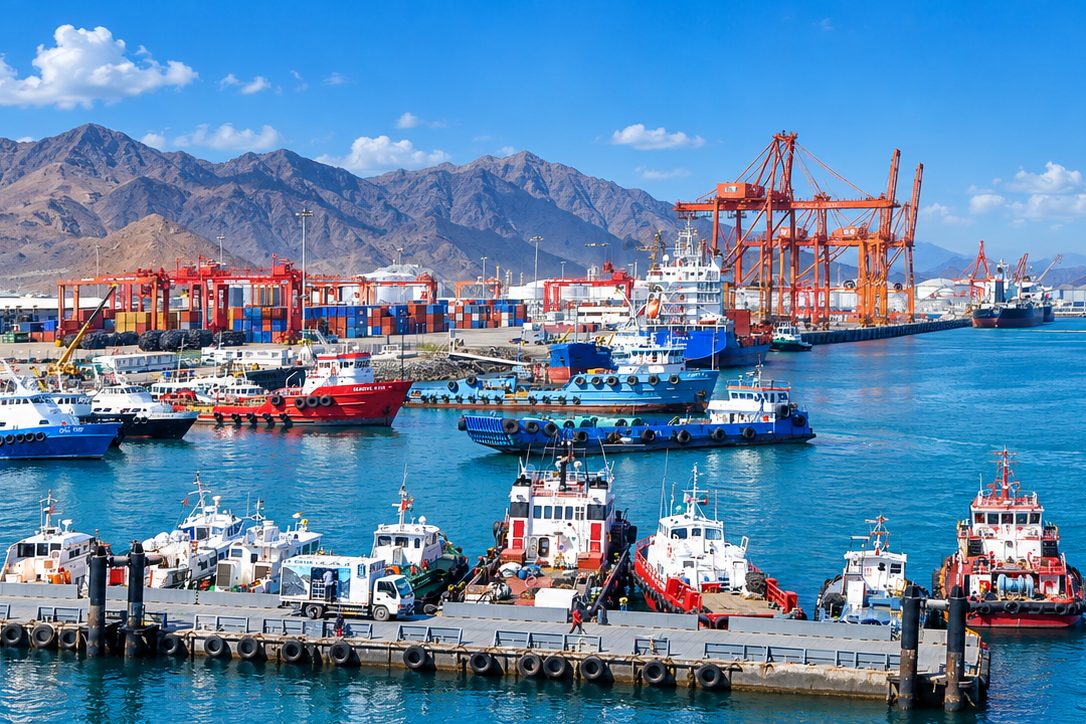
Ship-to-ship oil transfers off Fujairah reached roughly 120 operations in September, compared with only a handful before the war, according to a Semafor report published on October 16, 2026. Tankers now wait offshore and swap cargoes at sea beside storage farms wedged between the mountains and the coast. The emirate has become the operational center of the UAE's effort to redraw the routes carrying Gulf crude to global markets.
Details
- The numbers: Semafor reported approximately 120 ship-to-ship transfers at the Port of Fujairah in September alone, against a handful in the pre-war period. The surge is visible on the water: tankers queuing offshore, cargoes changing hands at sea, and storage capacity stretching along the coastline between the mountains and the berths.
- The pipeline: The Abu Dhabi–Fujairah crude line, inaugurated in 2012, carries a reported capacity of roughly 1.8 million barrels per day. It was built long before the current conflict, functioning less as a transport project than as a standing strategic option whose activation date could not be forecast.
- The strategy: The UAE's emerging Zero Hormuz approach does not aim to erase the strait from the map, which is impossible. Its stated logic is narrower: reducing the strait's ability to dictate the country's economic and political choices, so that every barrel exported outside Hormuz shrinks the damage a closure could inflict.
- Regional moves: Saudi Arabia is working to expand crude export capacity through the Red Sea. Kuwait is examining alternative routes through neighboring states. Oman's ports on the Gulf of Oman and the Arabian Sea are gaining weight in regional trade calculations, pulling volumes away from the single passage.
- The trade-off: Cutting dependence on one strait can create fresh dependence on transit states, pipelines and export terminals. Kuwait moving oil through Saudi or Emirati territory would need long-term agreements guaranteeing transit rights and protecting its interests during political or security crises — shifting the issue from geography to contracts.
- The economics: International Monetary Fund research on supply-chain diversification has flagged the trade-off between efficiency and security. Diversification lowers exposure to disruption but adds cost, and delivers most value when aimed at inputs that are both highly vulnerable to interruption and hard to replace.
- The cost question: Governments are weighing billions on pipelines and backup ports whose full capacity may sit unused for much of their operating life. The return often appears not as revenue but as a loss that never occurs — purchased certainty that can also become a permanent drain on public finances if overbuilt.
- What Fujairah needs: Berths and storage tanks alone will not convert traffic into an economy. A durable center would require commodity trade finance, ship maintenance, marine engineering, shipping analytics and insurance, backed by credible legal institutions, a skilled workforce and technical education.
- The vulnerability: Infrastructure outside the strait is not automatically safe. A route avoiding Hormuz may cross another exposed area, pipelines need pumping stations, electricity, control systems and physical protection, and an alternative port absorbing rising volumes can generate its own bottlenecks and costs.
Background
Hormuz long gave Gulf producers a short, efficient route to Asian and global markets, an advantage embedded in the region's modern oil economics. The contradiction stayed manageable while shipping flowed: the same passage that minimized costs in peacetime could sharply raise them in war.
Between the lines
The threat to a chokepoint can erode the leverage it provides. The more costly dependence on Hormuz becomes, the stronger the incentive to fund alternatives — and the 2012 Abu Dhabi–Fujairah line shows that incentive predates the current war by more than a decade. Fujairah's coastline has not moved and no new reserves were found there; what changed is the value assigned to its location. Whether that value survives depends on whether the activity clustering around the port outlasts the disruption that created it.
What's next
Watch whether Kuwait secures transit agreements through Saudi Arabia or the UAE, whether Riyadh expands Red Sea export capacity, and whether Fujairah's transfer volumes hold once normal shipping through Hormuz resumes.
Source: Semafor, International Monetary Fund