UAE opens Fujairah–Abu Dhabi freight rail to bypass Hormuz
Etihad Rail begins three weekly container runs linking Fujairah port to Abu Dhabi's industrial city.
Summary
- Etihad Rail begins three weekly container runs linking Fujairah port to Abu Dhabi's industrial city.
- Fujairah sits outside the Strait of Hormuz, disrupted since Iran began attacking ships.
- The route gives Gulf cargo an overland alternative to a contested maritime chokepoint.
The latest
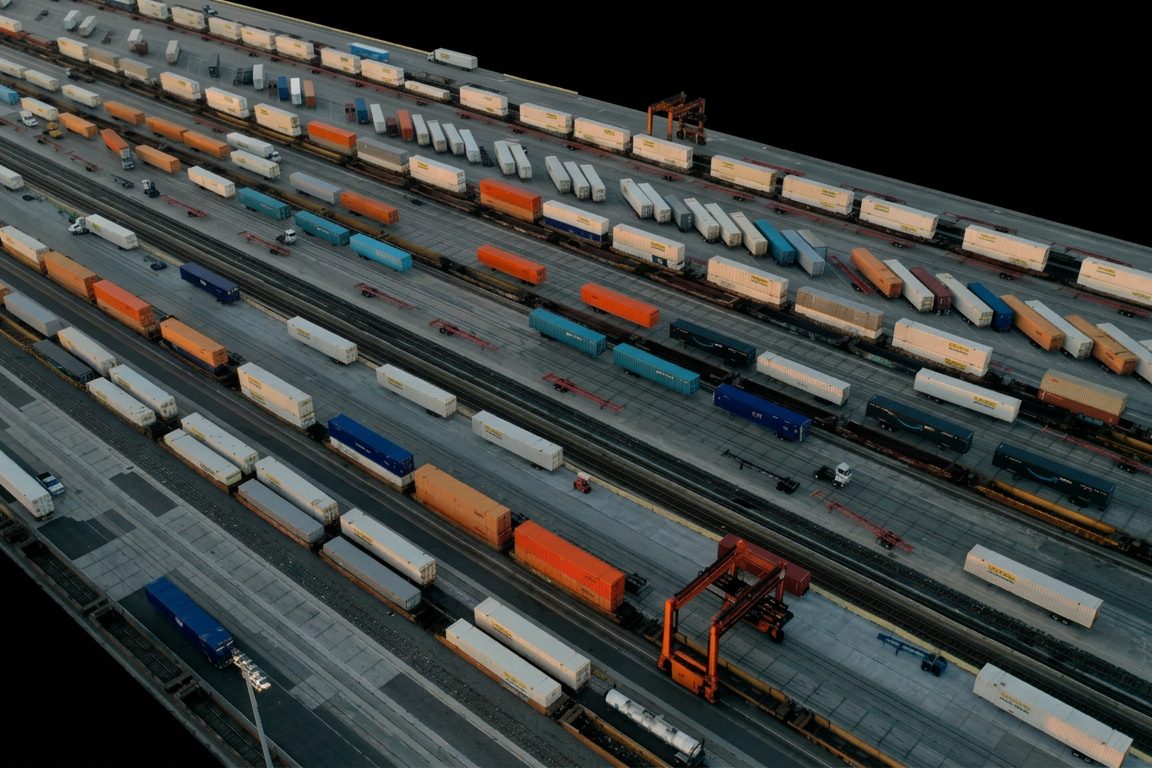
Containers can now move overland from the UAE's main port outside the Strait of Hormuz to Abu Dhabi, after Etihad Rail opened a freight service covering roughly 200 kilometers from Fujairah on the Gulf of Oman coast. The service runs three times a week, with customs clearance handled at the Abu Dhabi end. It adds another route for goods bypassing the disrupted waterway.
Details
- The route: Etihad Rail is moving containers about 200 kilometers, or 124 miles, from Fujairah port on the UAE's Gulf of Oman coast to Abu Dhabi's industrial city. Cargo arriving by sea at Fujairah can be railed inland and cleared through customs on arrival in Abu Dhabi.
- The frequency: The service operates three times a week. No expansion in the number of weekly runs has been announced, and the volume of containers each service is expected to carry has not been set out.
- Why Fujairah: Fujairah is the UAE's main maritime gateway lying outside the Strait of Hormuz. That geography has turned it into a crucial entry point for goods since Iran began attacking shipping in the strait early in its conflict with the United States.
- The chokepoint: The strait remains disrupted, and the new rail link is described as another route for cargo to avoid it. Shipping that reaches Fujairah never has to transit the waterway, shifting the final leg of the journey from sea to land.
- Saudi build-out: Saudi Arabia is adding rolling stock in parallel. Its state railway has ordered 780 railcars from the US manufacturer Greenbrier, a purchase that signals Gulf freight capacity is being expanded beyond the UAE's new service.
- The cargo mix: The Saudi order includes tank cars built for phosphoric acid and molten sulfur, both industrial chemical shipments. The value of the Greenbrier contract and the delivery schedule for the 780 railcars were not disclosed.
- The wider plan: The freight push dovetails with a longer-running Gulf ambition to connect the peninsula's cities by passenger rail. Governments across the region have pursued that network for years, and the war has made the plan more urgent.
Background
The Strait of Hormuz is the sea passage through which most Gulf oil and container traffic normally moves. Iran began striking ships there early in its conflict with the United States, pushing regional trade toward ports and land routes that sit outside the waterway.
Between the lines
The logic of both projects is redundancy. A port outside Hormuz is only useful if cargo can move inland without a sea leg, which is what the 200-kilometer Etihad Rail link supplies. Saudi Arabia's 780-railcar order and the revived passenger-rail ambition point the same way: overland capacity that a blockade at the strait cannot reach.
What's next
Watch whether Etihad Rail raises the three-times-weekly frequency, when Greenbrier begins delivering the 780 railcars to Saudi Arabia's state railway, and whether Gulf governments set a timetable for the peninsula-wide passenger network.
Source: ontime+