Gulf Railway Hits 55.9% Completion, Full Operation Targeted for 2030
GCC chief Jassim Albudaiwi said the Gulf Railway project is 55.9% complete overall.
· Last verified: 8 Nov 2026 (Argaam)
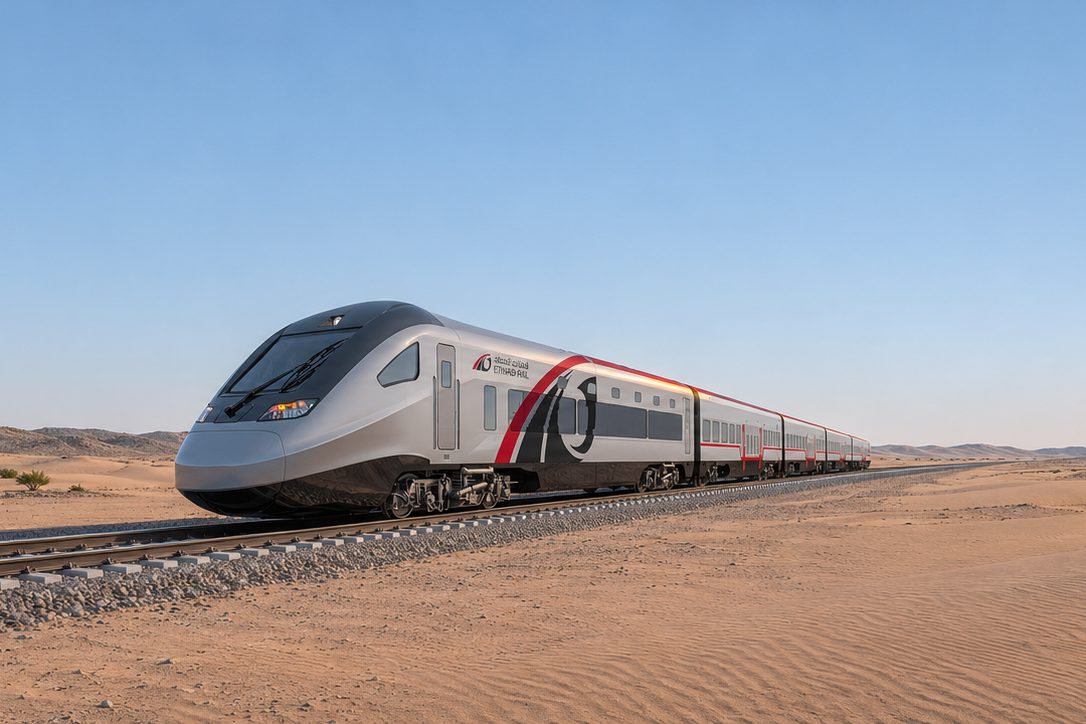
Summary
- GCC chief Jassim Albudaiwi said the Gulf Railway project is 55.9% complete overall.
- Member states signed a general agreement regulating construction and joint operation obligations.
- Full operation is targeted for December 2030, linking ports, industrial hubs and logistics centers.
The latest
Construction of the Gulf Railway has reached 55.9% completion, with full operation targeted for December 2030 under an agreed timetable, GCC Secretary-General Jassim Mohammed Albudaiwi said. He spoke at a press conference marking the signing of the general agreement linking member states through the railway, a framework he described as organizing each state's obligations for building and running the line in step with national networks.
Details
- The figure: Albudaiwi put total completion of the railway project at 55.9%, and said December 2030 remains the target date for full operation. He said the schedule follows a work plan and timeline already agreed among member states, without detailing the progress achieved by each individual country.
- The agreement: The general agreement signed at the press conference establishes a shared framework governing the commitments of member states in executing and operating the project. Albudaiwi said it is designed to keep the Gulf line integrated and aligned with existing national railway networks rather than running as a separate system.
- The route: According to Argaam data, the line will run 2,117 kilometers, starting in Kuwait and passing through Dammam in Saudi Arabia, then reaching Bahrain via a planned bridge. From Dammam the route continues to Qatar, then the UAE, and finally to Muscat through Sohar in Oman.
- The cost: Argaam data put the total estimated cost of the GCC railway at roughly 15.4 to 16 billion dollars for core infrastructure. The figure covers the basic network build and was not broken down by national segment or by the planned Bahrain bridge crossing.
- The economic case: Albudaiwi said the project reflects member states' ambition to build an integrated Gulf transport system that eases and speeds travel for citizens and residents. He said it should also lift intra-GCC trade and freight movement by connecting economic and industrial centers, ports and logistics hubs.
- The coordinating body: Albudaiwi stressed the role of the Gulf Railway Authority in coordinating with member states, following up on implementation, and aligning connection and operating requirements with the national networks each segment must plug into.
- Passengers and freight: The secretary-general framed the line as dual-purpose, carrying both people and goods. Linking ports and logistics centers places freight at the core of the commercial case, while cross-border passenger service is presented as a direct benefit for residents of the six member states.
- What was not set out: Albudaiwi did not announce interim milestones between the current 55.9% completion level and the December 2030 target, nor did he specify when individual national segments or the planned Bahrain bridge are due to be finished.
Background
The GCC railway has been under discussion among member states for years as a single corridor linking the six economies. The newly signed general agreement moves it from a set of national projects toward a commonly regulated network with shared operating obligations.
Between the lines
The timing matters more than the percentage. With construction already past the halfway mark, the agreement signed is about operation rather than approval, setting how states will run a line that is partly built. The emphasis Albudaiwi placed on aligning requirements with national networks points to interoperability, not construction, as the harder remaining task before 2030.
What's next
Watch for the Gulf Railway Authority to publish implementation milestones toward December 2030, for completion dates on national segments, and for progress on the planned Bahrain bridge crossing linking the line to Dammam.
Source: Argaam