Fujairah Keeps UAE Oil Flowing Through Seven-Month Hormuz Crisis
UAE sustained and possibly raised oil exports via Fujairah despite the Hormuz disruption, analysts say
· Last verified: 12 Oct 2026 (The National)
Summary
- UAE sustained and possibly raised oil exports via Fujairah despite the Hormuz disruption, analysts say
- Habshan-Fujairah pipeline, open since 2012, moves up to 1.8 million barrels per day
- Industry debate now shifts from emergency workarounds to how Gulf producers build the next layer of resilience
The latest
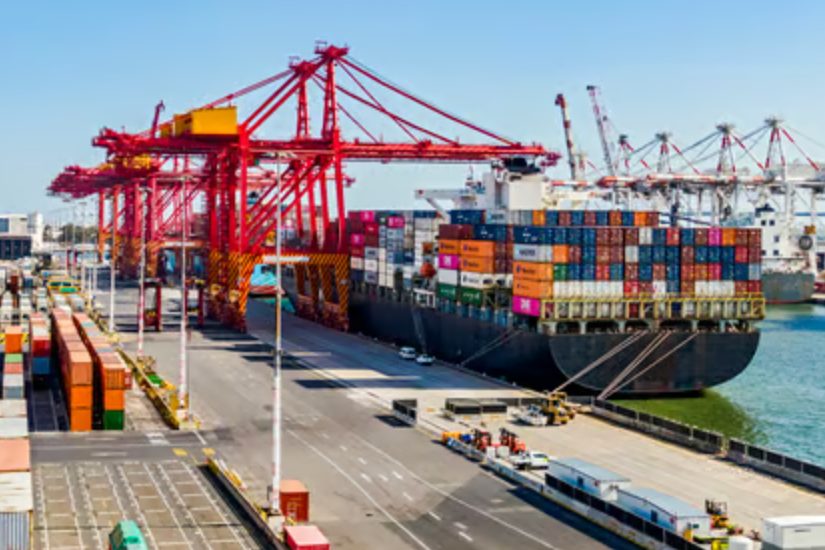
Indian Ocean ports on the UAE's east coast have carried the country's crude past the Hormuz chokepoint through more than seven months of war, allowing exports to hold and possibly rise. Fujairah, Khor Fakkan and the Habshan-Fujairah pipeline have absorbed the diverted volumes, and the shift rests on infrastructure commissioned over the past 13 years rather than emergency improvisation.
Details
- The pipeline: The Habshan-Fujairah crude line opened in 2012 with capacity of up to 1.8 million barrels per day, bypassing the Strait of Hormuz entirely. A second line was announced in May, before the war, with completion planned for next year.
- Storage, rail and power: Construction of large-scale oil storage in caverns cut into Fujairah's mountains began in 2018, and work on a new railway to the port started in early 2020. The Barakah nuclear plant began splitting atoms in August 2020, credited with securing electricity as gas facilities came under attack.
- The shipping squeeze: Supertankers are described as in desperately short supply. Chartering one now costs $80 million, more than the $74 million cited for a SpaceX launch. Adnoc Logistics and Services has assembled a large tanker fleet that has proved essential to moving barrels.
- Trading arm: Adnoc built a trading capability over several years that was profitable in peacetime. During the war it has mattered more, salvaging supply to customers and capturing commercial openings created by the dislocation.
- Regional parallels: Comparable preparedness is cited across the Gulf: the GCC electricity grid, Saudi Arabia's East-West pipeline, and the port, refinery and storage complex at Duqm in Oman. Saudi Arabia, through Bahri, plus Kuwait and Qatar, run sizeable tanker fleets of their own.
- The war's reach: Bombers flew on February 28 and politicians and observers expected a short war. It has run more than seven months, though most direct strikes on Gulf and Iranian territory have stopped, while Yemen, Lebanon, Syria and Iraq became entwined.
- Fuel diplomacy: US President Donald Trump announced on Friday that Russia's Vladimir Putin had promised to supply some diesel to ease a growing global fuel crisis, attributed to the wars in the Gulf and Ukraine.
- The conference run: Sultan Al Jaber, Minister of Industry and Advanced Technology and Adnoc chief executive, attended the UAE Energy Markets Forum in Fujairah last week. The WPC Energy Congress opens in Riyadh this week despite fatal attacks on the capital's airport, with Adipec following next month.
Background
Disruption at Hormuz is not a new risk. Gulf producers have treated a blockade or broader trouble in the Strait as a known contingency since the Tanker War of the 1980s, and have been tested by the 2011 regional unrest, the 2014 price crash, the 2020 pandemic and the 2022 Ukraine war.
Between the lines
The assets carrying UAE barrels today were not built for this war: the pipeline dates to 2012, the caverns to 2018, Barakah and the railway to 2020. That argues resilience comes from broad deployable capacity rather than crisis-specific planning. The analysis also warns against treating war as a replacement for the climate agenda, arguing conflicts end while climate pressure persists and can itself inflame conflict.
What's next
Watch the WPC Energy Congress in Riyadh this week and Adipec in Abu Dhabi next month for producer signals, plus completion of the second Habshan-Fujairah line scheduled for next year and any movement on tanker charter rates.
Source: The National