Iraq signs two transit data deals linking East to West
Iraq's communications ministry signed two data transit contracts with UAE's e& and Bahrain's Alliance.
· Last verified: 10 Nov 2026 (Iraqi News Agency (INA), Iraqi Ministry of Communications)
Summary
- Iraq's communications ministry signed two data transit contracts with UAE's e& and Bahrain's Alliance.
- Communications Minister Mustafa Sanad oversaw the signing on Monday, according to a ministry statement.
- The contracts position Iraq as a routing corridor for data traffic between East and West.
The latest
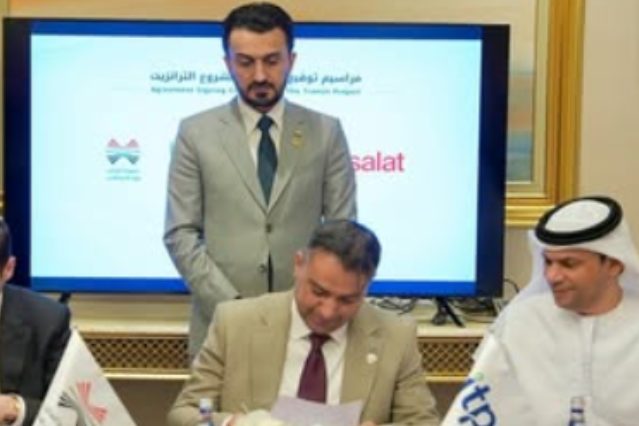
Iraq signed two data transit contracts with the UAE's e& group and Bahrain's Alliance to carry traffic between East and West through Iraqi territory. Communications Minister Mustafa Sanad oversaw the signing on Monday, according to a ministry statement received by the Iraqi News Agency. The ministry framed the agreements as linking the two regions across Iraq.
Details
- The contracts: Two separate transit agreements were signed, one with e& and one with Alliance, according to the communications ministry statement. Both are described as transit arrangements, meaning traffic originates and terminates outside Iraq while crossing Iraqi infrastructure. The ministry did not publish the commercial terms of either contract.
- The counterparties: e& is the Emirati telecommunications group, and Alliance is a Bahraini company, according to the ministry statement. Both are Gulf operators, placing the Iraqi route at the centre of a corridor running from the Gulf toward Europe. The statement did not detail the technical capacity assigned to each partner.
- Who signed: Communications Minister Mustafa Sanad personally oversaw the signing ceremony on Monday, according to the statement carried by the Iraqi News Agency. Ministerial sponsorship signals that the contracts are treated as state-level commitments rather than routine commercial procurement by the national operator.
- The stated purpose: The ministry described the objective as linking East to West through Iraq, the formula used in its statement. That is the standard phrasing for international fibre transit, in which a country sells passage rights across its terrestrial network to carriers moving data between continents.
- The timing: The signing took place on Monday, according to the ministry. The statement did not announce a date for the routes to enter commercial service, nor a timeline for any construction or upgrade work the contracts may require.
- What was not disclosed: The ministry statement named the two partners and the purpose of the deals, but did not specify contract duration, revenue projections, bandwidth volumes, or the Iraqi network segments involved. No figures were attached to either agreement in the announcement.
- The state role: The communications ministry is the signing party on the Iraqi side, according to the statement, keeping the transit arrangements under direct government authority rather than assigning them to a separate commercial entity in the announcement.
Background
Terrestrial fibre routes across Iraq are an alternative to subsea cables through the Red Sea and Suez for traffic moving between Gulf states, Asia and Europe. Transit fees are charged to foreign carriers for the right to cross a country's network.
Between the lines
Both counterparties named in the statement are Gulf operators, and both deals are transit rather than domestic service contracts, which points to Iraq selling passage rather than buying capacity. Ministerial sponsorship of the signing, rather than an operator-level announcement, suggests Baghdad is presenting the corridor as state policy. Without disclosed terms, the revenue scale remains unquantified.
What's next
Watch for the ministry to disclose contract terms, capacity volumes or a service start date, and for any announcement of the Iraqi network segments carrying the e& and Alliance traffic.
Source: Iraqi News Agency (INA), Iraqi Ministry of Communications