Saudi Arabia, Qatar explore oil and gas pipelines bypassing Hormuz
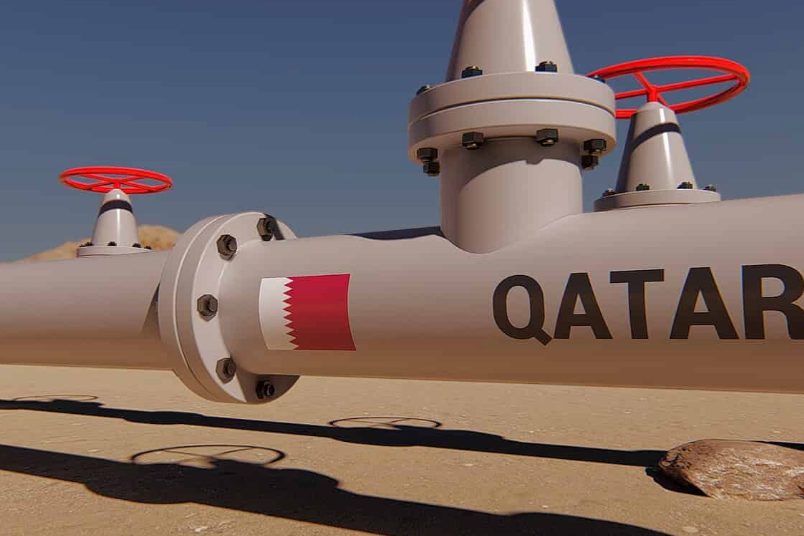
Riyadh and Doha signed an energy memorandum covering possible joint oil and gas export pipelines.
· Source: Bloomberg · Last verified: 12 Oct 2026
Summary
- Riyadh and Doha signed an energy memorandum covering possible joint oil and gas export pipelines.
- The Iran war disrupted Gulf LNG shipments, exposing Qatar's lack of alternatives to Hormuz.
- Saudi Arabia says alternative pipelines cost far less than not having them.
The latest
Saudi Arabia and Qatar will study building pipelines to transport and export oil and gas, under an energy memorandum of understanding signed by Saudi Energy Minister Prince Abdulaziz bin Salman and Qatari Minister of State for Energy Affairs Saad bin Sherida al-Kaabi. The Saudi Press Agency said the accord also covers refining, petrochemicals, electricity, clean hydrogen and renewables. No routes, capacities or costs were specified.
Details
- The accord: The memorandum spans petroleum and gas and their derivatives, refining, petrochemicals and power, alongside clean hydrogen, renewables, energy efficiency and storage, according to the Saudi Press Agency. Within it, the two sides agreed to examine joint opportunities to build oil and gas pipelines and develop the infrastructure needed for energy access.
- What the war exposed: The conflict with Iran revealed uneven Gulf capacity to work around the Strait of Hormuz. Saudi Arabia and the UAE kept exporting crude through pipelines that bypass the strait, while liquefied natural gas shipments from Qatar and the UAE faced severe disruption for lack of alternative routes able to absorb their volumes.
- The existing routes: Saudi Arabia continued shipping crude through the East-West pipeline, known as Petroline, linking the Eastern Province to Yanbu on the Red Sea. The UAE relied on its Abu Dhabi-to-Fujairah line on the Gulf of Oman. Both predate the crisis and reflect earlier investment in export infrastructure.
- The gas gap: No existing pipeline can absorb the region's gas export volumes. The Dolphin line, operating since 2007, carries limited quantities of Qatari gas fully contracted to the UAE and Oman. Gas requires direct pipelines to consumption sites or liquefaction before shipping, demanding heavy infrastructure spending and long-term supply agreements.
- The minister's case: Prince Abdulaziz told the International Energy Forum in Riyadh that the kingdom is developing additional pipelines to provide routes avoiding Hormuz. He said the cost of building alternative pipelines is "far less than the price of their absence," and pledged Saudi Arabia would keep meeting its obligations to global energy markets despite the war.
- A researcher's proposal: Naji Abi-Aad, senior energy adviser at the Gulf Research Center, proposed in a study a pipeline from Qatar through Saudi Arabia or the UAE to a new liquefaction plant in Fujairah or on the Omani coast, costing near 25 billion dollars. That project remains distinct from the memorandum, which fixes no route, capacity or financing.
- Saudi gas push: Riyadh is raising domestic gas output to meet electricity demand and free crude for export, targeting an 80% increase in total gas production capacity by 2030 against 2021 levels, reaching roughly 6 million barrels of oil equivalent per day.
- Jafurah: Aramco began producing gas late last year at Jafurah, described as the largest single shale gas field outside North America, with more than 100 billion dollars invested. The company expects it to free about 1 million barrels per day of crude for export by the decade's end, with output targeted at 2 billion standard cubic feet by 2030.
- Processing capacity: Aramco also started up its Tanajib gas processing plant in December, with a targeted capacity of 2.6 billion standard cubic feet per day once fully operational.
Background
The Strait of Hormuz carries a large share of Gulf energy exports. The war with Iran obstructed traffic through it, pushing producers to revisit overland routes first built decades ago for oil, never for gas.
Between the lines
The asymmetry is the story. Saudi Arabia and the UAE already own crude bypasses; Qatar's LNG has none, and Dolphin's capacity is fully committed elsewhere. That makes Doha the party with the sharper incentive, and Saudi territory the obvious corridor. But the memorandum fixes no route, capacity or cost, and a liquefaction-based workaround carries an estimated price tag near 25 billion dollars.
What's next
Watch whether the two sides convert the memorandum into a defined route, capacity figure or cost estimate, and whether Aramco's Jafurah output and Tanajib plant hit their stated 2030 targets.
Source: Bloomberg, Saudi Press Agency